Why Downspout Puddles Form on Cincinnati-to-Dayton Properties
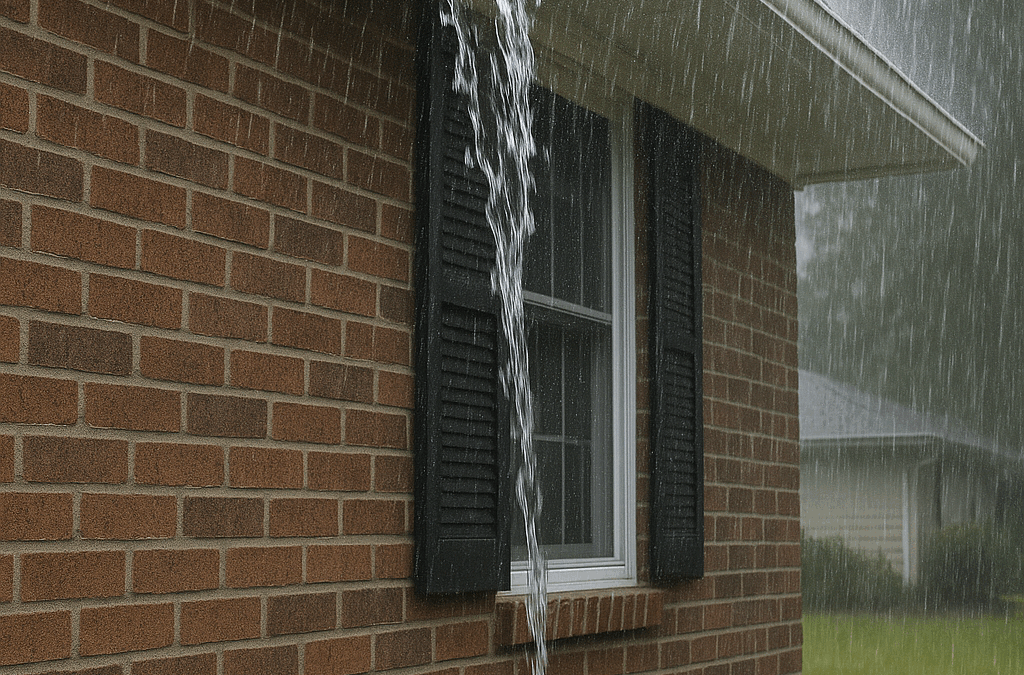
Fall rain can leave a round pool below one downspout while another outlet on the same house has no standing water. The difference may begin at the gutter, but it can also arise after runoff reaches the ground. Soil moisture, slope, paving, landscaping, and storm...

What Fall Debris Does on Top of Gutter Guards in Cincinnati and Dayton
Autumn debris does not stop at the roof edge simply because a gutter has a guard. Across the Cincinnati-to-Dayton corridor, leaves, needles, seeds, twigs, and fine organic material may land on the guard surface, collect at roof transitions, or travel into the gutter...

Gutter Stains Explained: A Cincinnati-to-Dayton Homeowner’s Guide
From Cincinnati through Dayton, fall weather brings leaf drop, damp mornings, pollen residue, and frequent shifts between sun and rain. Those conditions do more than fill gutters with debris. They can also leave gray lines, dark patches, pale chalking, and...
Fall Temperature Changes and Aluminum Gutters: A Cincinnati-to-Dayton Guide
Fall across southwest Ohio can shift quickly from sunny afternoons to chilly nights. Aluminum gutters warm and cool with the surrounding conditions, expanding slightly at higher temperatures and contracting as temperatures fall. The movement is expected material...

Roof Pitch, Valleys, and Gutter Runoff: A Cincinnati-to-Dayton Guide
The roof is the first part of a home's rainwater path, and its shape determines how water reaches the gutters. Pitch affects how directly runoff travels downhill. Valleys, dormers, and adjoining roof planes decide where several streams meet. Across the...