
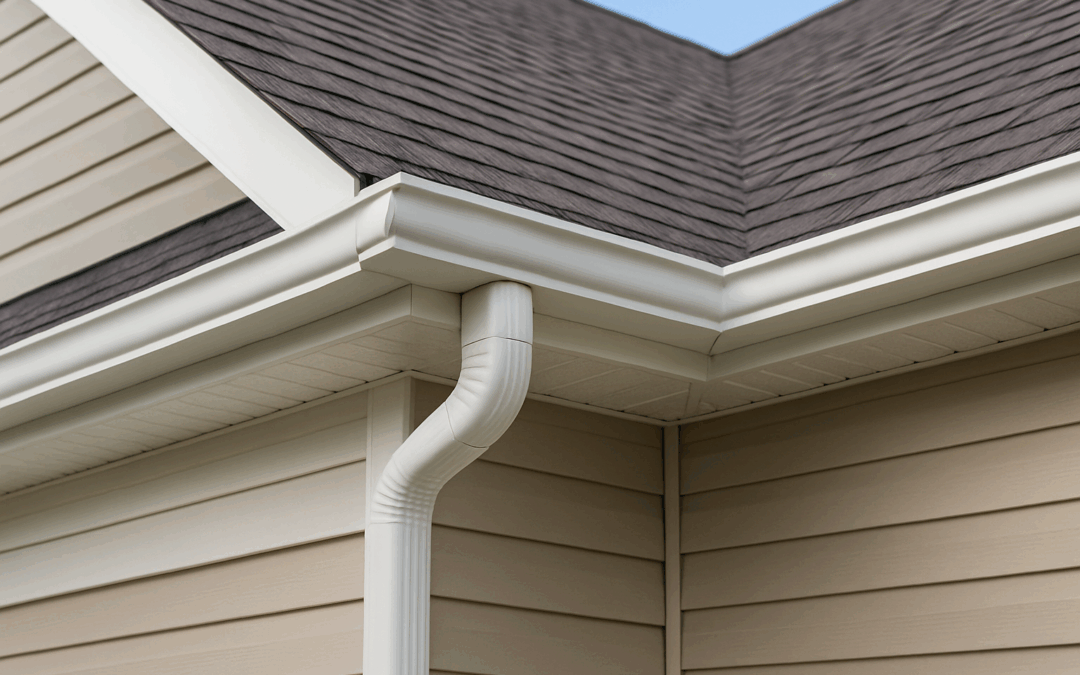
The roof is the first part of a home’s rainwater path, and its shape determines how water reaches the gutters. Pitch affects how directly runoff travels downhill. Valleys, dormers, and adjoining roof planes decide where several streams meet.
Across the Cincinnati-to-Dayton corridor, these features can explain why one gutter section spills during heavy rain while another remains relatively quiet. Looking at the roof and gutter together provides more information than considering either component alone.
What Roof Pitch Tells Homeowners
Pitch is a measure of roof steepness. A sharply angled roof rises quickly, while a low-slope surface changes elevation more gradually.
Gravity acts along both, but the route and speed of runoff differ. Roof material, rainfall rate, wind, and surface condition modify the result, so pitch is not a stand-alone prediction of gutter performance.
The drainage demand at an eave depends on the roof area above it and how quickly that area delivers water.
Steep Roofs May Send Water to the Eave Rapidly
After a steep roof becomes wet, runoff can accelerate toward its lower edge. A strong Ohio Valley storm may produce a broad sheet or several fast streams.
Water with greater momentum may approach the outside portion of the gutter opening. If the channel sits away from that path, some runoff can cross the front edge rather than drop inside.
This observation does not identify a single cause. Gutter position, wind, roof-edge flashing, surface texture, and temporary debris all affect where the water travels.
Shallow Slopes Can Collect Water Over a Broad Area
A porch or addition may have a wide, low-slope roof. Water can move more gradually across it, yet the surface still collects rainfall across every square foot.
Small depressions, seams, and debris can divide that water into distinct routes. Instead of arriving evenly along the eave, runoff may leave at a few concentrated points.
Low-slope roofing may look accessible from the ground, but wet surfaces remain hazardous. Storm observations should not require walking on the roof.
Roof Valleys Increase Localized Flow
A valley is formed where two downward-sloping roof planes meet. It combines runoff from both surfaces into a narrower channel.
The gutter beneath the valley therefore receives water faster than many nearby sections. During intense rain, that location may splash or overflow while the rest of the channel continues draining normally.
Leaves and other material often travel down the valley as well. A debris mat at the outlet can cover part of the gutter opening exactly where the incoming flow is greatest.
Multi-Level Roofs Add Water in Stages
Some homes have upper sections that discharge onto lower roofs. The lower plane receives direct rainfall plus runoff from above before delivering both to its gutter.
Dormers, bay windows, garages, and additions create more intersections and short eaves. Each feature changes the size and direction of the area feeding a gutter run.
This is why two channels of equal length may face different conditions. One may serve a single plane, while the other receives water from several levels.
Southwest Ohio Homes Have Varied Roof Geometry
The Cincinnati-to-Dayton area contains historic urban houses, mid-century subdivisions, rural properties, and newer homes with multiple gables. Roof complexity differs considerably among them.
Mature tree cover also changes the pattern. Leaves and seed material settle in valleys and inside corners, while exposed roofs may receive more wind-driven rain.
The slope of the yard becomes relevant after water leaves the downspout, but it should not be confused with roof pitch. They affect different stages of drainage.
Surface Material and Roof Edges Shape the Final Path
Textured shingles, smooth metal, and other coverings influence whether water travels as a thin film or a faster stream. Residue and weathering can create additional pathways.
At the eave, drip edge or gutter apron helps guide runoff away from roof materials. The gutter still needs to be positioned where it can receive that flow.
Roof pitch, surface, edge details, and channel position work together. No single characteristic explains every instance of overshooting or overflow.
Roof Pitch and Gutter Slope Serve Different Jobs
Roof pitch moves water from the ridge toward the eave. Gutter slope directs it along the eave toward an outlet.
When a valley delivers a sudden surge, the gutter needs enough open pathway to carry that water sideways. Leaves, sediment, a low spot, or a downspout restriction can slow the second stage.
The visible overflow may appear at the incoming stream even when the flow limitation is farther down the run.
Seasonal Temperature Changes Matter After the Rain
As autumn progresses, overnight temperatures begin falling across southwest Ohio. Water held in gutter low points or trapped by debris may remain after the roof has finished shedding runoff.
That observation becomes more relevant as freeze-thaw weather approaches. It does not establish that damage will occur, but it shows that the final portion of the drainage route is not emptying at the same rate as the roof.
Safe Details to Record During a Storm
From the ground or indoors, homeowners can watch for:
- Overflow limited to the area below a valley
- Water crossing the gutter’s outer edge
- Runoff traveling behind the gutter
- An upper roof feeding the same lower section
- Nearby channels that remain below capacity
- Steady or irregular downspout discharge
- Visible leaves at the point of concentrated flow
A short recording can capture how the pattern changes as the rain becomes heavier or lighter. Ladder use during wet weather adds unnecessary risk.
Compare Different Types of Rain
A long gentle rain and a brief thunderstorm can produce similar totals with different arrival rates. Wind direction and moving debris can also change performance from one storm to another.
Recurring overflow at the same location and similar intensity provides a more reliable pattern than one isolated event. It can show which roof section places the greatest demand on the gutter below.
Following Water From Roof to Ground
Roof pitch affects speed, valleys create concentration, and multiple levels add runoff in stages. Roof surfaces and edge details shape entry into the gutter. The gutter’s lengthwise slope and downspouts then manage the remaining flow.
Viewing this as one connected route helps Cincinnati and Dayton homeowners understand why drainage demands vary around the same house. Roof geometry often explains why a small portion of the gutter receives a much larger share of stormwater at once.