From Cincinnati through Dayton, fall weather brings leaf drop, damp mornings, pollen residue, and frequent shifts between sun and rain. Those conditions do more than fill gutters with debris. They can also leave gray lines, dark patches, pale chalking, and rusty-looking trails on the outside of a gutter system.
Staining is not a single condition. Its shape, starting point, and location can help explain whether the change is mostly on the surface or connected to the route rainwater is taking.
Why Gutters Get “Tiger Stripes”
Many dark gutter marks begin along the front lip and extend vertically. A thin layer of rainwater can roll over that edge, carrying dust, pollen, roof sediment, and organic matter onto the painted face. After the moisture evaporates, residue remains along the path.
Successive rains can follow similar routes and deepen the lines. Because a row of marks resembles an animal pattern, they are commonly called tiger stripes. They can develop without a complete blockage and may be visible even when the downspout is discharging water.
Tree cover and traffic-related dust vary across the Cincinnati-to-Dayton corridor, so neighboring homes may not weather in the same way. Shade, roof geometry, gutter color, and exposure also affect how quickly a pattern becomes noticeable.
How to Tell One Type of Stain From Another
Vertical Runoff Residue
These marks are usually narrow and begin near the top of the gutter. They may look darkest after rainfall. Several lines along a straight run often reflect repeated surface water paths rather than one isolated leak.
Weathered or Chalky Coating
An aging painted finish may lose gloss and develop a light powdery appearance. Unlike runoff tracks, chalking generally covers a wider area. Exposure to sunlight can make it more pronounced on one side of a home.
Organic Film in Damp Areas
Green, brown, or black patches may develop where moisture lingers. North-facing eaves, densely shaded lots, and sections near overhanging branches can dry more slowly. The patchy appearance may overlap with ordinary dirt, making the cause less obvious from a distance.
Orange or Rust-Colored Lines
Most residential aluminum gutters do not rust, but steel fasteners and adjacent metal pieces can. Orange-brown staining may travel from one of those sources across an aluminum surface. Following the trail upward can help locate its origin.
When Exterior Marks Relate to Water Flow
A narrow surface stripe and a broad overflow stain tell different stories. If the entire front face is marked beneath one section, or if siding and ground surfaces show repeated splashing, water may be crossing the gutter edge there.
Leaves are only one possible restriction. Seed pods, twigs, roof granules, pine needles, and decomposed material can reduce the open space inside a gutter or at a downspout inlet. During an Ohio Valley downpour, runoff can arrive rapidly, especially below roof valleys and intersecting slopes.
Gutter and downspout cleaning concerns debris within the waterway. It should not be confused with cosmetic washing of the exterior face. Clearing an internal restriction may alter future overflow, but it may not erase discoloration that has accumulated over months or years.
Marks Behind the Gutter Suggest a Different Route
When stains appear on fascia or soffit rather than the gutter front, water may be moving behind the channel or around another roof-edge component. Gutter apron and drip edge sit at the transition where roof runoff approaches the gutter. Conditions at that transition can influence whether water enters the channel cleanly.
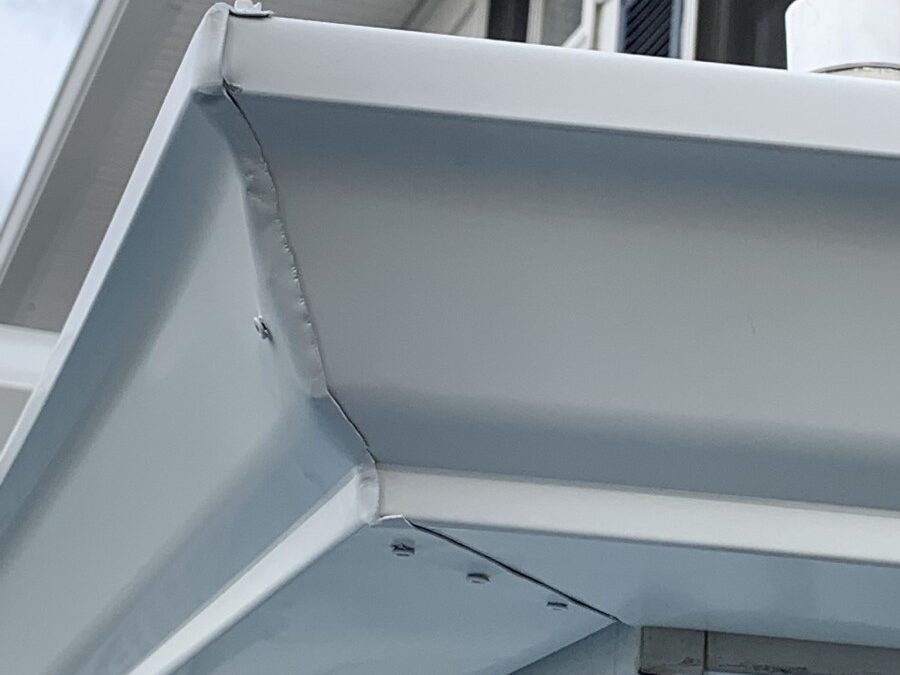
Localized discoloration beneath a corner, end cap, or downspout connection can indicate occasional dripping. Wind-driven rain may also put water in places that remain dry during a calm shower. Because several sources can produce a similar mark, observation during rain is more informative than color alone.
Inspecting Stains Without Damaging the Finish
Begin with a ground-level survey. Note where every mark starts and whether it appears only on shaded elevations. A camera with optical zoom can help compare the gutter lip, joints, downspout openings, and nearby fascia without climbing.
If cleaning a painted surface is appropriate, consult the manufacturer’s guidance first. Strong chemicals and abrasive tools can remove gloss or alter color. Never combine cleaning products, and test a permitted approach in a small area that is not prominent. Consider how runoff could affect plants and other exterior materials.
Avoid using the gutter as ladder support. Sloped ground, wet leaves, overhead wires, and slick roof edges add risk, especially during fall maintenance season.
Understanding What the Exterior Is Showing
Gutter stains document repeated contact with water, air, and surrounding material. Vertical dark lines commonly trace small runoff paths. Broad dullness is more typical of finish weathering. Patchy growth favors damp shade, while rusty trails often begin at another metal component.
The important question is whether water remains within its intended route. By comparing the stain pattern with what happens during rainfall, Cincinnati-to-Dayton homeowners can separate ordinary exterior discoloration from signs of overflow, dripping, or roof-edge flow that merit a closer look.