
Fall across southwest Ohio can shift quickly from sunny afternoons to chilly nights. Aluminum gutters warm and cool with the surrounding conditions, expanding slightly at higher temperatures and contracting as temperatures fall.
The movement is expected material behavior, not evidence of a defect by itself. It can still help Cincinnati and Dayton homeowners understand seasonal ticking sounds, joint changes, sealant wear, and why some symptoms appear when daytime and nighttime temperatures move farther apart.
How Thermal Movement Works
Metal changes dimension as its temperature changes. The difference in a short section is small, but the movement accumulates over the length of a gutter run.
Seamless gutters contain fewer joints along straight roof edges than sectional channels. Corners, end caps, outlets, and downspout transitions remain necessary, and those points manage changes in direction or connection.
A properly supported system can accommodate normal movement. Existing weakness in sealant, hardware, or fascia may become more visible as the surrounding metal shifts.
Gutter Length Influences the Total Change
Long eaves create long pieces of aluminum. Each portion responds to temperature, producing a combined change across the run.
This does not mean a long gutter will fail. It means that transitions at its ends, corners, and outlets need to remain secure while the channel changes slightly.
The movement itself is difficult to see. A homeowner may instead notice a pop after sunset, a recurring gap at an end cap, or a seam that drips only under certain conditions.
Sealant and Aluminum Age Differently
Sealant bridges connections that cannot be formed from one piece of metal. It must stay bonded while the aluminum warms, cools, and carries water.
Some sealants become less flexible with age and weather exposure. A brittle edge can crack or lift away from the metal. Moisture, dirt, and oxidation may also affect adhesion.
Even a visible gap does not leak continuously. The water level in the gutter, wind direction, and debris location influence whether rain reaches it.
Support Hardware Controls Alignment
Hangers and fasteners keep the gutter positioned along the roof edge and maintain its drainage path toward outlets. The supporting fascia or mounting surface also needs to remain stable.
A loose attachment point can allow a section to move more than intended. Wet autumn debris may add weight and deepen a developing low spot.
Thermal movement, water load, and support condition interact. One symptom can therefore have several contributing factors.
Popping and Ticking Can Come From Several Materials
Aluminum may produce brief sounds while cooling after direct sunlight. The sound can travel through a strap or adjoining trim and seem louder inside the house.
Gutters are not the only source. Downspouts, fascia wrap, drip edge, metal roofing, and siding can make similar noises. Wind can create rattling, while rainwater can knock inside an elbow.
Homeowners can note whether the sound occurs in dry cooling weather, during gusts, or only while water is flowing.
Shade, Color, and Orientation Change Surface Temperature
A dark gutter in direct western sun can become warmer than a light-colored or shaded run. Tree cover, roof overhangs, and nearby structures create further differences.
As a result, two elevations on the same Cincinnati or Dayton home may not respond at the same time. One side may tick during evening cooling while another remains quiet.
This variation is useful context but does not predict whether a leak or separation will develop.
Autumn Leaves Add Moisture and Weight
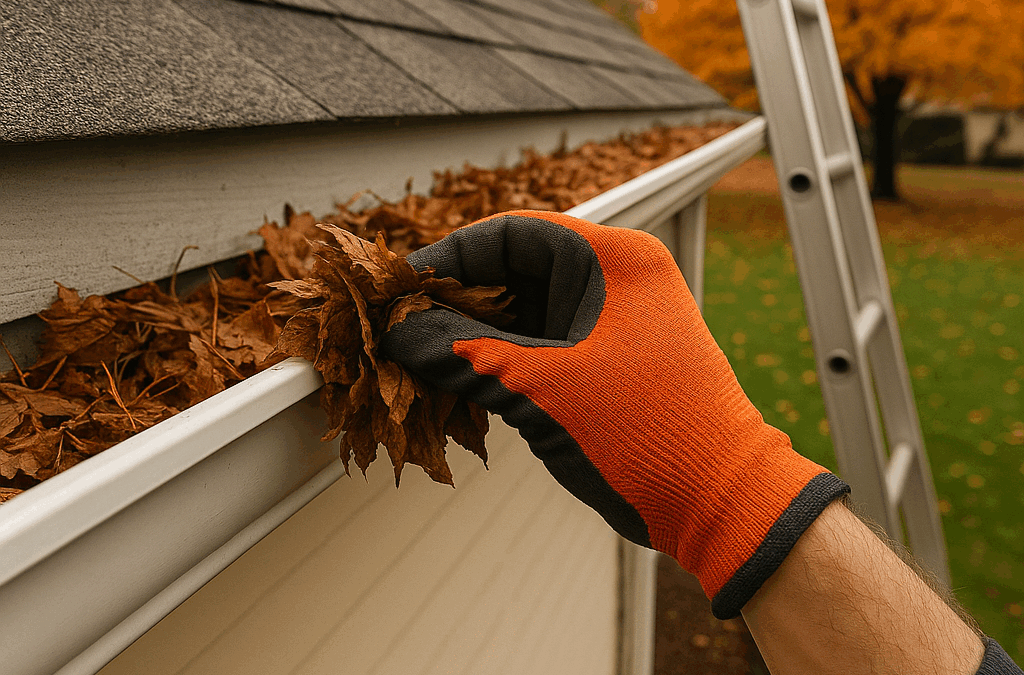
Temperature swings coincide with falling leaves, seed pods, nuts, and needles. Debris can rest against joints, hold water, and obstruct an outlet.
When water rises behind a restriction, it may reach sealant seams above the normal flow level. A leak that appears during fall may therefore involve debris as well as the condition of the joint.
Gutter and downspout cleaning removes accumulated material from the channel. It does not stop aluminum from moving with temperature, but it can make recurring drainage and joint behavior easier to evaluate.
Freeze-Thaw Cycles Affect Retained Water
Southwest Ohio commonly experiences temperatures moving above and below freezing as fall progresses into winter. Water held in debris or a low section may freeze and thaw repeatedly.
The expansion of freezing water is separate from the contraction of cold aluminum. Ice also adds weight, creating another load for hangers and fasteners.
A clear flow path may reduce retained water, although outdoor gutter surfaces can still remain wet after precipitation.
Ground-Level Observations That Add Context
Homeowners can safely record:
- A drip returning at one corner or end cap
- Sealant that appears cracked or detached
- A gutter pulling away from its mounting surface
- Water remaining in one low section
- Ticks that occur as a sunny wall cools
- Rattling or movement during dry wind
- Stains developing below a connection
Photographs from the same location can show whether a gap or stain changes over time. Climbing during rain, frost, or freezing conditions adds unnecessary risk.
Distinguishing Temperature Response From Other Conditions
Normal thermal movement can create small dimensional changes and occasional sounds. Persistent leakage, widening gaps, sagging, and loose components usually require a broader explanation.
Debris, aged sealant, impact, fastener condition, fascia strength, and gutter alignment may all be relevant. Observing the same area through several warm days, cool nights, and rain events can reveal a more consistent pattern.
For homes from Cincinnati to Dayton, autumn temperature swings are one part of the gutter environment. Understanding their effect helps place seasonal sounds and joint behavior in context without turning every change into a promise of either failure or trouble-free performance.