
The Ohio Valley’s first frost can highlight small differences around a roofline. One gutter run may be dusted white from end to end, another may thaw as soon as sunlight arrives, and a shaded corner may hold a thicker patch well into the morning.
Frost does not automatically mean a gutter is leaking, clogged, or damaged. It records a temporary interaction between moisture and cold surfaces. When homeowners consider its timing, location, and behavior during a thaw, the pattern can still provide useful information.
Why an Empty Gutter Can Look Frosted
Metal exposed to a clear night sky can cool rapidly. If the surface becomes cold enough, water vapor changes into ice crystals even without rain. A light, even coating may develop on the gutter’s exterior while the inside remains dry.
This type of frost often appears elsewhere at the same time. Roof shingles, cars, lawns, and railings may all carry a similar film. The coating may be heaviest just before sunrise and begin fading once warmer air or direct light reaches the house.
Orientation matters. A roofline facing morning sun can clear well before a north-facing run. Mature trees, neighboring homes, valleys, and overhangs can extend shade. Across the Cincinnati-to-Dayton corridor, local cloud cover and terrain can also create different conditions over relatively short distances.
Recognizing Ice Made From Standing Water
Frozen water inside the channel usually looks different from atmospheric frost. It tends to be thicker, smoother, and limited to a low area, outlet, seam, or pocket of debris. It may remain after the fine coating on nearby metal has vanished.
That ice confirms that water occupied the area before freezing, but it does not identify the cause. Rain from the previous day may not have drained completely. Wet leaves may have released moisture, or melting frost higher on the roof may have reached the gutter and refrozen.
A single cold morning offers limited evidence. If the same section repeatedly holds visible water after rain and then freezes overnight, the repeated sequence is more meaningful than one isolated patch.
How Late-Season Debris Changes Freezing
By late October, gutters may contain broad leaves, maple seeds, small twigs, shingle granules, and dark organic material. These materials can hold water in small spaces. When temperatures fall, the damp mixture may harden into a compact layer.
The frozen material can narrow the path toward a downspout until it thaws. Sun may warm the metal above it while the lower portion remains icy, producing a wet spot that lasts longer than surrounding frost.
Gutter and downspout cleaning addresses debris within the system. It does not stop weather-related frost from appearing on exposed metal, and a frosted exterior does not by itself establish that debris is present.
Following Ice Around the Roof Edge
The position of thicker ice may suggest where water traveled. A frozen ridge along the front lip can follow earlier overflow. Ice behind the gutter indicates a route along the roof edge or fascia. A concentrated mass near the outlet may show that moisture moved slowly at the connection to the downspout.
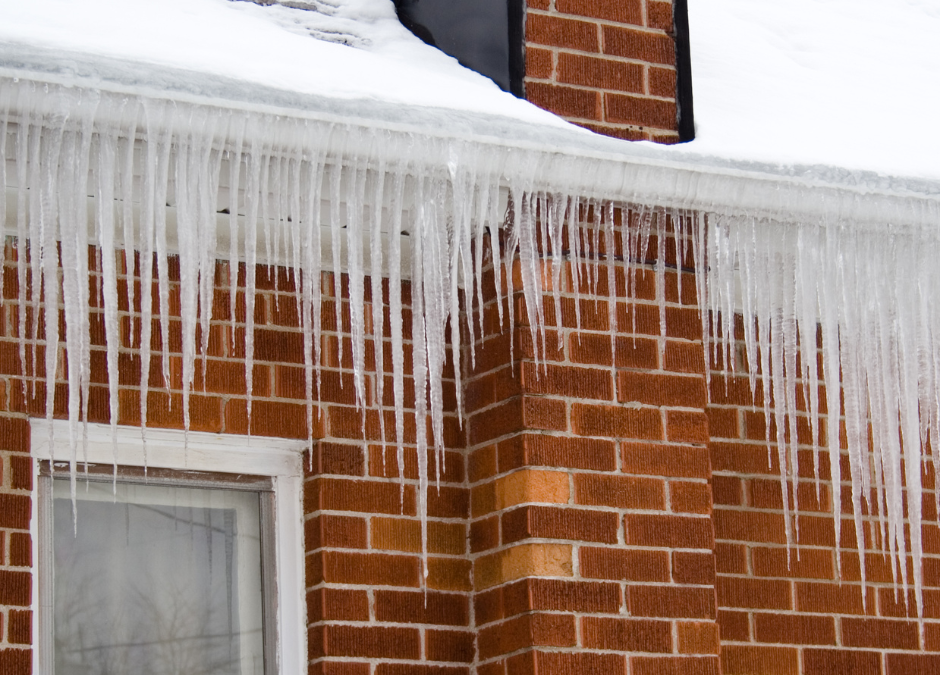
Icicles add another clue, but not a complete answer. They form when liquid water reaches an edge and freezes during a drip. Overflow can produce that sequence, as can melting roof frost or windblown moisture.
Freeze-thaw cycles complicate the picture. Water can melt during a warmer afternoon, move several inches or feet, and freeze again after sunset. The last visible ice may therefore be downstream from the original source.
Why Repeated Observation Matters in the Ohio Valley
Fall temperatures between Cincinnati and Dayton can cross the freezing point several times in a week. One house may frost under clear skies while another stays slightly warmer because of cloud cover, elevation, wind, or nearby structures.
Compare the gutter with the immediate surroundings rather than relying only on a regional forecast. If every exposed surface is frosted, a broad gutter coating fits the larger weather pattern. If one small section remains icy after everything else clears, note its relationship to shade, debris, an outlet, or a low point.
Check From a Safe Location
Remain on the ground when surfaces are frosted. Roofs, ladders, walkways, and decks can be slick, while thawing ice can release without warning. A phone camera with zoom or binoculars can show the roofline from a safer distance.
Take an early photo and another after the area warms. Record recent rain and whether the patch returns after later storms. During rainfall, observe from shelter for water moving over the front, behind the gutter, or toward the nearest downspout.
Put the First Frost in Context
Fine frost that clears with the morning warm-up is generally consistent with normal cold-weather moisture. Thicker ice that repeatedly aligns with standing water, damp debris, or an overflow path represents a different pattern. Neither observation is a promise of future performance or proof of a specific problem.
For Cincinnati-to-Dayton homeowners, the most useful information comes from comparison. Watching the same roofline during dry weather, rain, frost, and thawing conditions can help distinguish a short-lived seasonal coating from moisture that regularly remains in one area.