
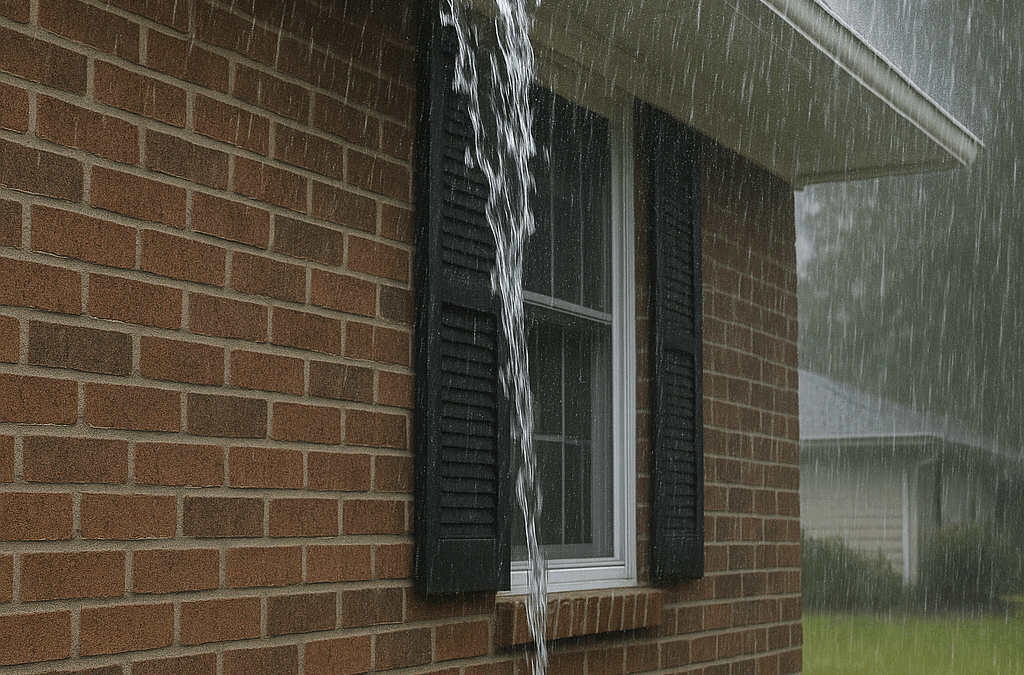
Cincinnati homeowners are familiar with the weather shifts of the Ohio Valley. A single season can bring wind-driven thunderstorms, extended rainfall, spring downpours, hail, falling limbs, winter ice, and repeated freeze-thaw cycles. Each of these conditions can affect a gutter system differently. Gutters may be bent by branches, loosened by wind, blocked by debris, weighed down by ice, or overwhelmed by fast-moving roof runoff. Gutters Etcetera believes Cincinnati, Ohio homeowners benefit from knowing how to inspect their gutters after severe weather, what signs may point to hidden drainage issues, and why post-storm observations can help prevent repeated water exposure around the roofline and foundation.
Why Cincinnati Weather Is Hard on Gutters
A gutter system must manage water while remaining securely attached to the roof edge. That combination makes it vulnerable to both hydraulic and mechanical stress.
Heavy rain creates hydraulic stress. Water moves from the roof into the gutter at a rate determined by the size and pitch of the roof, as well as the intensity of the rainfall. During a strong Cincinnati thunderstorm, water can enter the gutter faster than a blocked or undersized section can move it toward the downspout. The result is overflow, often at roof valleys, corners, or low-slope sections.
Wind and falling branches create mechanical stress. High winds may loosen hangers, pull fasteners from fascia boards, shift downspouts, or bend exposed gutter sections. Cincinnati’s established neighborhoods also have mature hardwood canopies, including sycamores, oaks, maples, beeches, and hickories. Branches and debris from these trees can land directly in gutters or on roof edges.
Winter adds another concern. Water held in sagging or debris-filled gutters can freeze. Ice adds substantial weight, and repeated freezing and thawing can stress gutter joints, hangers, fascia boards, and downspout connections. A gutter that is only slightly out of alignment in autumn may become a more serious issue after a Cincinnati ice event.
Begin With a Safe Exterior Walkaround
After a storm, wait until conditions are safe before inspecting the home. Avoid ladders on wet ground, do not approach downed electrical lines, and use caution around trees that may have damaged or unstable branches.
Start by walking around the property and observing the gutters from ground level. Look for obvious changes in alignment. Gutters should be straight and consistently attached along the fascia. A sagging section, outward tilt, visible gap, or crooked downspout may indicate storm-related movement.
Binoculars can make ground-level inspection more effective. They allow homeowners to examine upper roof edges, gutter corners, and second-story downspouts for debris, bent metal, separated connections, or visible standing water.
Inspect for Wind-Related Movement
Wind damage often begins with hardware movement rather than total gutter failure. A hanger may loosen slightly, or a fastener may pull partway out of the fascia. These conditions can be difficult to notice unless homeowners compare the affected section with the rest of the gutter run.
Look for gutter sections that appear to dip between hangers or pull away from the roof edge. A gap behind the gutter can allow rainwater to run down the fascia instead of entering the channel. Over time, this can contribute to paint failure, wood deterioration, and soffit moisture problems.
Downspouts should also be checked for loose straps and separated elbows. High wind can twist a downspout enough to break a seam or pull an elbow out of alignment. If a downspout is detached near the top, rainwater may spill onto the wall or foundation area during the next storm.
Watch for Overflow and Drainage Clues
The clearest evidence of gutter performance often appears below the roofline. After rainfall, inspect landscaping, walls, and foundation-adjacent areas for signs of uncontrolled water flow.
Common overflow indicators include:
- Erosion in mulch or soil beneath gutter runs
- Mud splatter on siding, brick, or basement windows
- Watermarks below gutter corners or end caps
- Washed-out planting beds
- Pools of water near the foundation
- Streaks of dirt or algae on exterior walls
- Depressions forming below downspout outlets
These signs do not always mean the gutter itself is damaged. A downspout may be clogged, an underground drainage outlet may be blocked, or a downspout extension may direct water toward a low area near the house. However, they do indicate that water is not being managed as effectively as it should be.
Cincinnati’s hillside terrain makes drainage observation especially important. On a sloped lot, water can move quickly across the surface and collect near the downhill side of a foundation. A downspout extension that appears to point away from the home may still release water where the natural grade carries it back toward the structure.
Check for Debris Dams and Blocked Downspouts
Storms can deposit debris into gutters even if the channels were recently cleaned. Leaves, twigs, bark, roofing granules, seed balls, and small branches can collect at downspout inlets. Cincinnati’s sycamore seed balls and large leaves can be particularly effective at trapping debris at these openings.
A blocked downspout often produces a recognizable pattern during heavy rain: water fills the gutter channel and spills over before reaching the downspout outlet. After the storm, the gutter may still contain debris or standing water around the downspout opening.
Homeowners should also look at ground-level drainage outlets. Underground downspout systems can develop obstructions from leaves, sediment, roots, or ice. If a downspout appears to fill with water, drains very slowly, or overflows at the upper connection, the blockage may be below grade rather than in the gutter channel.
Examine Seams, Corners, and End Caps
Gutter joints deserve close attention after storms because heavy rain can expose sealant failures that are difficult to notice in dry conditions. Inspect corners, end caps, outlets, and downspout connections for drips, staining, visible separation, or mineral residue.
A mitered corner may receive a large volume of water when two roof planes direct runoff toward the same location. If the corner sealant has weakened, water can leak onto fascia or siding every time it rains. End cap leaks are also common and can create concentrated dripping at the end of a gutter run.
Cincinnati’s freeze-thaw cycles can gradually stress sealed connections. Water entering a small seam may freeze during winter weather, expand, and widen the opening over time. Identifying a leak during a rainy season allows homeowners to address it before cold weather adds more mechanical stress.
Inspect Fascia, Soffit, and Basement-Adjacent Areas
When gutters overflow or pull away from the fascia, water may reach materials that are not meant to receive regular runoff. Inspect the fascia board for peeling paint, dark staining, soft spots, or visible separation. Check soffit panels beneath the roof edge for staining, sagging, or signs of moisture exposure.
Cincinnati homeowners with basements should also observe whether new dampness, water staining, or efflorescence appears after storms. White mineral deposits on basement walls can indicate recurring moisture movement through masonry or concrete. Gutters are not the only possible cause, but overflow and poor downspout discharge are important surface-drainage conditions to evaluate when basement moisture follows rainfall.
Check Downspout Extensions After Wind and Rain
Downspout extensions are often moved during storms, landscaping work, or lawn maintenance. After severe weather, confirm that extensions are still attached and that they direct water away from the foundation.
Flexible corrugated extensions may be flattened, disconnected, or turned toward the house. Hinged extensions may be obstructed by leaves or sediment. Rigid extensions may shift if their joints have loosened. Each condition can change where roof runoff is released.
During winter, discharge locations should also be observed for ice buildup. Water released onto frozen ground can travel in unexpected directions, especially on sloped Cincinnati properties. A discharge point that works well during warm weather may require additional attention if winter runoff is repeatedly returning toward the foundation.
Document Damage and Recurring Patterns
Taking photographs after a storm creates a useful record. Document damaged gutters, fallen limbs, standing water, washed-out soil, stains, and disconnected downspouts. Include images from both close range and a wider view showing the affected section of the home.
Over time, photos can reveal whether a gutter section is gradually sagging, whether stains are spreading, or whether the same downspout discharge area repeatedly erodes after rain. These recurring patterns can help homeowners distinguish isolated storm damage from an ongoing drainage design or maintenance issue.
Conclusion
Storms can affect Cincinnati gutter systems through wind movement, debris accumulation, branch impact, intense rainfall, and winter ice loading. For Gutters Etcetera and Cincinnati, Ohio homeowners, inspecting gutters after severe weather is an important opportunity to spot loose hangers, bent channels, leaking seams, blocked downspouts, displaced extensions, and foundation-adjacent drainage problems. By starting safely from the ground, observing where water traveled during the storm, and documenting any visible changes, homeowners can better understand the condition of their gutter system and reduce the likelihood that repeated storm runoff will create more serious moisture concerns around the home.