
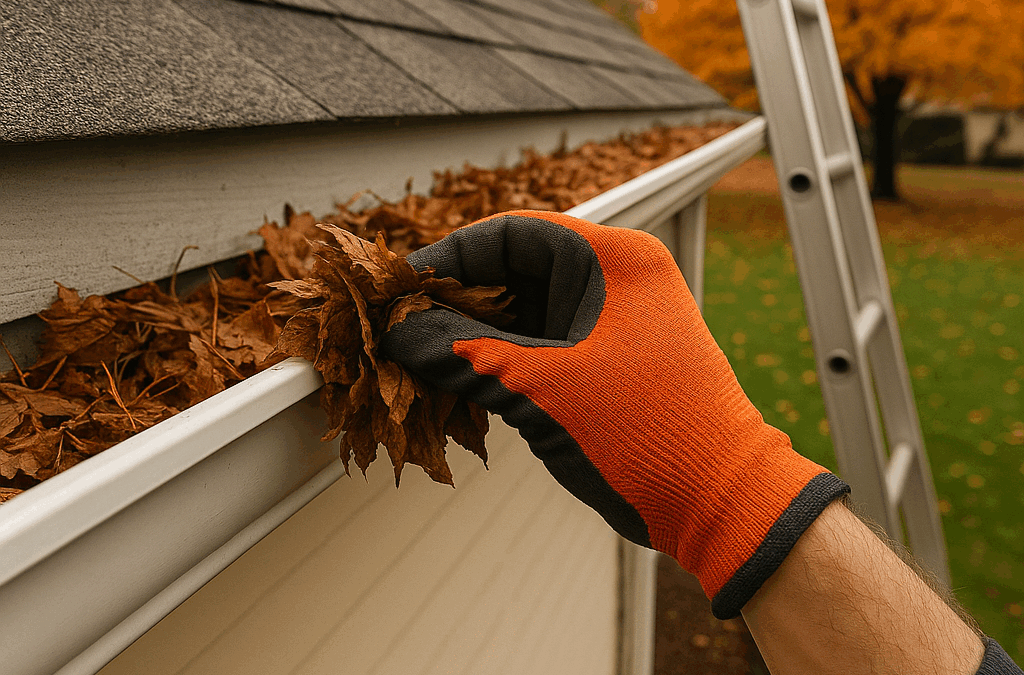
In Cincinnati, Ohio, fall gutter preparation is not a discretionary home maintenance task — it is a genuinely time-sensitive seasonal protection action that directly determines how well the home’s gutter system performs through one of the most demanding weather periods of the year. Cincinnati’s Ohio Valley climate delivers two overlapping conditions each autumn that make gutter preparation urgent: the year’s heaviest debris loading from the metropolitan area’s extraordinary hardwood canopy, and the approach of a winter that brings sustained rainfall, meaningful freeze-thaw cycling, and ice events that place severe mechanical and hydraulic demands on residential gutter systems. Gutters that enter Cincinnati’s winter season with debris-loaded channels, failed joint sealants, loose hangers, and misdirected discharge management are positioned to cause fascia deterioration, foundation moisture damage, basement water intrusion, and structural ice-loading damage before spring arrives. Gutters Etcetera believes that Cincinnati homeowners who understand what fall preparation involves and complete it thoroughly before winter’s conditions arrive are making one of the most cost-effective protective investments available for their homes.
Why Cincinnati’s Fall and Winter Create a Specific Gutter Risk
Cincinnati’s gutter risk in the fall-to-winter transition period is shaped by the combined demands of the Ohio Valley’s hardwood canopy debris loading and the character of Southwest Ohio’s winter weather — factors that interact to create conditions more severe than either would produce independently.
Cincinnati’s mixed hardwood canopy — sycamores, oaks, maples, beeches, hickories, sweetgums, and the diverse ornamentals of established hillside neighborhoods — is among the most prolific debris producers in the Ohio Valley. The sycamore, particularly abundant along Cincinnati’s river corridor and creek valleys, deposits large leaves and woody seed balls that are exceptionally effective at blocking downspout inlets and resisting water flow through gutter channels. During peak fall drop, gutters beneath Cincinnati’s urban canopy can fill completely within days of a thorough cleaning, making timing and thoroughness the two most critical variables in fall maintenance effectiveness.
Cincinnati’s winter then subjects these debris-loaded gutters to conditions that are more severe than in mid-South cities. Southwest Ohio’s freeze-thaw cycling — with winter temperatures that regularly reach the teens and occasionally drop below zero in the coldest events — creates ice formation in debris-laden gutters that can add hundreds of pounds of weight to gutter systems designed to carry only the dynamic weight of flowing water. Cincinnati’s ice storms — which occur with meaningful frequency and can deposit significant ice accumulation — represent the most severe mechanical loading events that residential gutters experience. And Cincinnati’s winter rainfall — with November and December among the city’s wettest months — delivers the precipitation volumes that blocked gutters cannot manage, causing the overflow events that deposit concentrated runoff at the foundation perimeter during winter’s most moisture-intensive period.
Optimal Cleaning Timing for Cincinnati’s Canopy
Timing the fall cleaning correctly is critical in Cincinnati’s heavy-canopy environment. Cleaning in early October — before the dominant deciduous species have completed their primary leaf drop — results in channels that refill with the bulk of the season’s debris before winter arrives. The investment of a thorough early cleaning is effectively wasted if the channels are reloaded by the primary canopy drop that follows.
Cincinnati’s dominant deciduous species complete most of their primary leaf drop between late October and late November, with some oak species holding leaves into December. The practical recommendation for most Cincinnati homeowners is to time the primary fall cleaning for November — after the majority of the canopy has released its primary drop — targeting completion before December’s weather begins bringing Cincinnati’s winter rain and freeze conditions in earnest.
Homeowners beneath very dense mixed canopy with multiple species dropping on different schedules may benefit from a two-phase fall approach: an early October cleaning targeting the earliest-dropping species (sycamore, black walnut, and early maples) followed by a primary November cleaning after the full canopy has completed its drop. This two-phase approach is more labor-intensive than a single late-season cleaning but may be the most effective maintenance approach for Cincinnati properties beneath the densest and most diverse canopy.
The Complete Cincinnati Fall Preparation Process
Full System Debris Removal
A thorough fall cleaning removes all debris — loose leaves, compacted organic material, seed pods and balls, twig accumulations, and the fine organic sediment that settles along the channel floor — from every gutter section and downspout on the property. The organic sediment layer along the channel floor is a specific cleaning target that casual debris removal often misses but that significantly affects drainage performance and material deterioration. This compacted, moisture-retaining material reduces channel flow capacity, holds biological acids against gutter material, and creates the persistently moist conditions that drive biological deterioration of adjacent fascia wood.
Cincinnati’s sycamore seed balls and sweetgum spiky balls deserve specific attention at downspout inlets, where their size and rigidity allow them to bridge the inlet opening and trap additional debris above, creating complete blockages even in channels that appear relatively clear. Confirming complete inlet clearance and flushing the full downspout vertical run from inlet to grade discharge verifies unobstructed drainage through the complete system.
System Flushing and Drainage Inspection
Flushing each cleaned channel from its high end toward the downspout provides immediate, practical drainage performance verification. Standing water at sagged channel locations, slow drainage suggesting partial remaining blockage or slope inadequacy, and active leakage at joints revealed by flushing water exiting through the gutter body rather than draining to the outlet — all of these conditions are most effectively identified during the flushing step and should be addressed before winter conditions make both their consequences and their repair more difficult.
Joint and End Cap Sealant Repair
Cincinnati’s temperature range — from sub-zero cold events in severe winter years to 90°F summer peaks — creates the most demanding thermal cycling of any city in this region, working gutter joint sealants open more aggressively than milder climates. Fall inspection of all joints, end caps, and seams should specifically evaluate for the separation and seepage that Cincinnati’s thermal cycling produces over time. Any joint showing active leakage, visible separation, staining on fascia or siding below the joint, or the mineral deposits that indicate long-term water migration should be resealed before winter. Sealant work performed in fall’s drier, moderate temperatures bonds and cures more effectively than emergency repairs attempted in Cincinnati’s cold, wet winter conditions.
Hanger and Fastener Security
Hanger evaluation and repair is particularly important in Cincinnati’s fall preparation given the city’s winter ice loading conditions. Gutter systems entering Cincinnati winter with loose, bent, or widely spaced hangers are at elevated risk of ice-loading deformation and detachment during the ice storm events that Southwest Ohio experiences. Walking every gutter section to identify hanger failures, re-securing loose hangers where fascia integrity permits, and supplementing hanger installations where spacing is wider than recommended provides the mounting integrity that resists Cincinnati’s most severe winter ice loading.
Hangers that have pulled from deteriorated fascia wood identify locations where the underlying issue — fascia deterioration from chronic moisture exposure — must be addressed before new fasteners can provide reliable holding capacity.
Fascia and Soffit Condition Assessment
Fall is the most appropriate season for a thorough visual assessment of fascia and soffit condition on Cincinnati homes. The fascia boards behind the gutters are most easily examined when the system has been cleaned and the roof edge is actively being inspected. Early moisture damage indicators — paint peeling, surface discoloration, soft spots discoverable by probing — should be identified and documented for repair planning before winter’s continued moisture exposure advances the deterioration further. Cincinnati’s freeze-thaw cycling is particularly damaging to already-moisture-compromised wood, as water that has penetrated into softened fascia freezes and expands during cold events, mechanically accelerating the deterioration that biological organisms have initiated.
Downspout Discharge Management Verification
Every downspout’s discharge management should be confirmed as properly positioned before Cincinnati’s winter rainfall season begins. Summer landscaping and lawn maintenance commonly displaces flexible extensions from their intended orientation; fall is the correction opportunity before the season when foundation perimeter moisture management from downspout discharge most directly affects basement moisture conditions in Cincinnati’s clay soil environment.
Cincinnati’s winter and early spring — November through March — typically include the year’s highest cumulative monthly precipitation totals. This is the period when properly directed downspout discharge matters most for preventing the foundation perimeter saturation that creates hydrostatic basement wall pressure and clay soil shrink-swell cycling. Confirming correct extension positioning before this high-rainfall period begins is a straightforward action with direct foundation protection benefit.
Underground system outlets should be cleared of leaf accumulation and confirmed as open and freely draining before winter. Cincinnati’s freeze-thaw cycling can cause partial ice formation at pop-up emitter outlets during extended freeze periods — outlet placement in protected locations and emitter designs that minimize freeze risk help maintain drainage function through Southwest Ohio’s most severe winter weather.
Roof Edge and Flashing Assessment
Fall preparation is an efficient opportunity to visually assess the roof edge condition — lifted or damaged shingles at the eave, drip edge flashing integrity, and the condition of any roof-to-gutter transitions — alongside the gutter system assessment. Cincinnati’s ice dam risk — a concern on rooflines with inadequate insulation and ventilation in the most severe winter events — is connected to roof edge and drainage conditions that fall inspection can identify before the conditions that produce ice dams arrive.
Cincinnati-Specific Winter Preparation Considerations
Cincinnati’s more severe freeze-thaw cycling compared to mid-South cities creates several specific fall preparation priorities that are more relevant in Southwest Ohio than in cities further south.
Ice Loading Hanger Density: Cincinnati’s ice storm events can deposit ice weight that exceeds the design loading capacity of gutter systems with standard or wide hanger spacing. Increasing hanger density during fall preparation — adding hangers in sections where spacing exceeds recommended intervals — reduces the deflection and detachment risk that Cincinnati’s most severe ice loading events create.
Gutter Guard Consideration: Cincinnati homeowners beneath Cincinnati’s sycamore-heavy canopy — particularly in neighborhoods along the Mill Creek corridor and the river valley communities — may benefit from evaluating gutter guard systems before winter. Guards that prevent large debris from entering the channel reduce the debris-ice matrix formation that creates the most severe winter loading conditions in Cincinnati gutters, though guard selection should account for sycamore seed ball size and the freeze-thaw cycling behavior of guard materials in Southwest Ohio’s winters.
Basement Preparation Connection: Cincinnati homeowners with basements should approach fall gutter preparation with specific awareness of the connection between gutter performance and basement moisture conditions. Ensuring that gutters are clean, draining fully, and directing all discharge away from the foundation before Cincinnati’s high-precipitation winter months begin is a proactive basement moisture management action that complements any interior waterproofing measures in place.
Conclusion
Fall gutter preparation in Cincinnati, Ohio is a time-sensitive, comprehensive seasonal maintenance process that directly determines winter performance and winter damage outcomes for the home’s gutter system and the components it protects. Properly timed post-canopy-drop cleaning, system flushing and drainage verification, joint and end cap sealant repair, hanger and fastener security evaluation, fascia and soffit assessment, and downspout discharge confirmation together ensure that Cincinnati gutters enter winter with the integrity, drainage capacity, and discharge management needed to handle Ohio Valley winter rainfall, resist Southwest Ohio’s freeze-thaw ice loading, and protect foundations, basements, and fascia through the season. Gutters Etcetera recognizes that Cincinnati homeowners who complete this fall preparation process thoroughly and consistently are making one of the most practical and cost-effective protective investments available in the winter health and long-term structural integrity of their homes.