
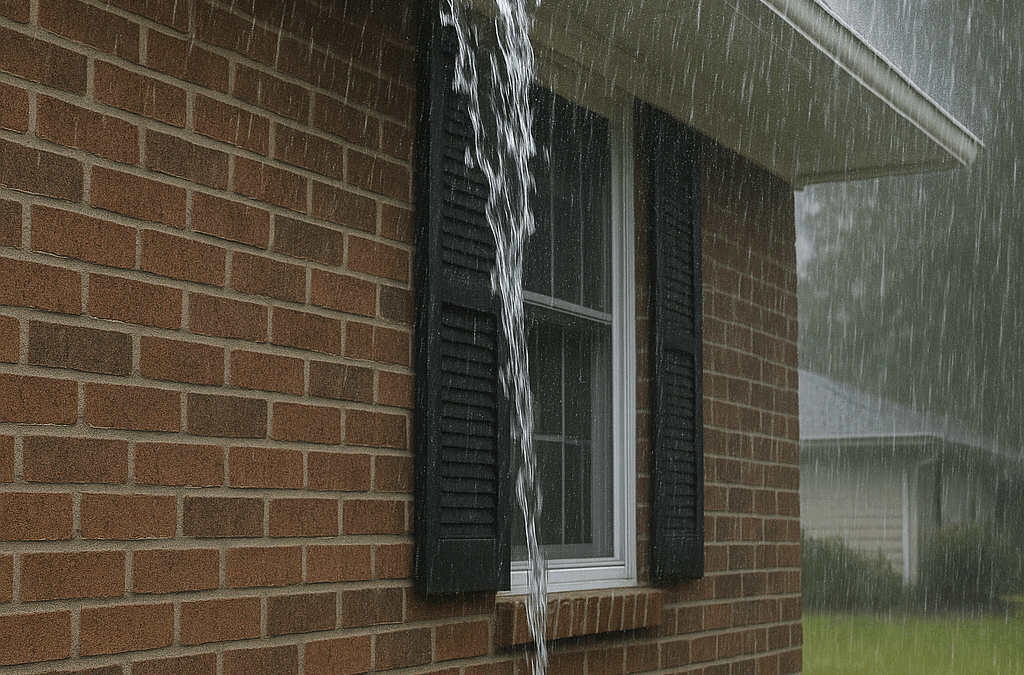
Ask most Cincinnati homeowners what protects their foundation, and the answers will typically involve waterproofing, drainage tile, sump pumps, and proper grading. These are all legitimate and important answers — but they address the management of water that has already reached the foundation perimeter. The first line of defense — the system that, when functioning correctly, prevents the large majority of roof-generated water from reaching the foundation perimeter in the first place — is the gutter system. Gutters Etcetera believes that Cincinnati homeowners benefit from understanding the direct, specific role that gutter performance plays in protecting foundation health, the mechanisms through which gutter failure contributes to foundation damage in Cincinnati’s Ohio Valley environment, and what a complete, properly functioning gutter system provides for the long-term structural integrity of Cincinnati homes.
The Scale of Roof Runoff in Cincinnati’s Rainfall Environment
The foundation protection role of gutters begins with understanding the volume of water that a Cincinnati home’s roof generates and the consequences of allowing that water to discharge unmanaged at the foundation perimeter.
Cincinnati receives approximately 42 to 45 inches of annual precipitation, with a seasonal distribution that includes active spring frontal and convective storm activity and summer thunderstorm events that regularly produce high rainfall rates. A home with 2,000 square feet of roof surface generates approximately 1,245 gallons of runoff per inch of rainfall. During a two-inch Cincinnati spring event — a routine occurrence during the March-through-May peak rainfall period — that same roof generates approximately 2,490 gallons of runoff. Over a full Cincinnati year, the cumulative runoff from a typical home’s roof represents a volume of water that, if deposited uniformly at the foundation perimeter rather than managed by a functioning gutter system, would represent one of the most significant and persistent moisture threats to foundation health on the property.
This volume perspective clarifies the gutter system’s role: it is not merely managing rainfall aesthetics or preventing water from falling on people walking near the home. It is intercepting and redirecting tens of thousands of gallons of annual roof-generated water away from the foundation perimeter — water that, without this interception, would be concentrated at the worst possible location on the property for the health of the foundation and the soil supporting it.
Cincinnati’s Geological Foundation Moisture Sensitivity
Cincinnati’s foundation moisture sensitivity is shaped by the geological and soil characteristics of the Ohio River Valley that make concentrated perimeter water deposition particularly consequential for homes throughout the metropolitan area.
Ohio Valley Clay Soils: Cincinnati’s soils are substantially clay-bearing throughout much of the metropolitan area, a characteristic of the Ohio River Valley’s glacial and alluvial deposit history. Clay soils respond to moisture fluctuations with the shrink-swell behavior that drives lateral and vertical foundation stress: expanding under saturation to create pressure against foundation walls and footings, contracting as they dry to create voids and differential settlement conditions. The amplitude of this shrink-swell cycling is directly driven by the amplitude of moisture fluctuations in the soil — fluctuations that concentrated gutter overflow at the foundation perimeter dramatically amplifies compared to the more moderate moisture conditions that functioning gutter discharge management maintains.
Freeze-Thaw Amplification: Cincinnati’s winter freeze-thaw cycling adds a dimension to foundation moisture sensitivity that is more severe than in milder southern climates. Water that has saturated foundation perimeter soil from gutter overflow or inadequate discharge management does not simply sit at the foundation perimeter through the winter — it freezes during cold events, expanding in the soil pores and against the foundation wall with the frost heave forces that are among the most mechanically damaging stresses basement walls experience. Each freeze event that acts on water-saturated foundation perimeter soil from inadequate gutter management creates mechanical foundation wall stress that accumulates over multiple winter cycles into the horizontal cracking and wall bowing that Cincinnati basement waterproofing professionals identify as freeze-thaw damage. Gutters that prevent the saturation enabling this freeze-thaw damage protect foundations not only during the wet seasons when overflow occurs but through the winter seasons when that saturation’s consequences manifest as frost heave stress.
Cincinnati’s Hillside Topography: Cincinnati’s dramatic hillside neighborhoods create site-specific foundation moisture dynamics where topographic slope can concentrate surface drainage toward foundation perimeters on the downhill faces of slope-positioned homes. For Cincinnati homes on hillside sites — the defining characteristic of the city’s most established residential neighborhoods — gutter overflow on the uphill or side faces of the home adds concentrated roof runoff to the natural surface drainage already converging toward the lower foundation perimeter. The compounding of natural drainage and gutter overflow on hillside Cincinnati sites creates particularly severe foundation perimeter saturation conditions that make gutter performance especially consequential on these properties.
Damage Pathways: How Gutter Failure Reaches the Foundation
Basement Wall Moisture Intrusion: Cincinnati has one of the highest proportions of basement-equipped residential housing in the Ohio Valley, and basement moisture intrusion is among the most common homeowner concerns in the metropolitan area. The connection between surface drainage management — including gutter performance — and basement moisture intrusion is well-established: gutter overflow saturates the soil adjacent to basement walls, creating hydrostatic pressure that drives moisture through the wall through every available pathway.
The specific moisture intrusion patterns that gutter-overflow-driven saturation creates in Cincinnati basement walls include: seepage at the wall-floor cove joint (the most common basement intrusion location), moisture wicking through masonry wall faces from saturated exterior soil contact, water entry at wall cracks and mortar joint failures, and in more severe saturation conditions, active water flow through the most significant wall defects. The seasonal correlation of basement moisture intrusion with Cincinnati’s spring rainfall season — intrusion appearing or intensifying during and after major spring events — is a characteristic diagnostic indicator of surface drainage contribution to basement moisture that should prompt evaluation of gutter performance and discharge management.
Crawl Space Deterioration: For Cincinnati homes on crawl space foundations, the foundation moisture pathway from gutter overflow differs from the basement intrusion mechanism but produces structural consequences that are equally significant over time. Foundation perimeter saturation from gutter overflow elevates soil moisture and humidity within the crawl space, creating the chronic high-humidity environment where wood-deteriorating biological organisms are most active. Cincinnati’s warm growing season provides extended periods of biological activity, and floor framing components in high-humidity crawl spaces — joists, sill plates, and subfloor sheathing — are subject to the biological wood deterioration that produces structural compromise over multiple seasons of moisture exposure.
Frost Heave and Wall Bowing: Cincinnati’s freeze-thaw cycling acting on gutter-overflow-saturated foundation perimeter soil creates the frost heave stress that contributes to horizontal basement wall cracking and inward wall bowing. These structural manifestations of freeze-thaw damage represent some of the most expensive basement remediation scenarios Cincinnati homeowners face — scenarios that require structural wall repair or wall replacement rather than simply waterproofing treatment. The preventable contribution of gutter overflow to the soil saturation that enables frost heave damage makes gutter performance a relevant factor in the freeze-thaw structural resilience of Cincinnati basement walls.
Differential Settlement: Concentrated gutter overflow at specific downspout locations creates zones of differential soil moisture saturation and shrink-swell cycling beneath the foundation. Some foundation perimeter sections experience more intense moisture cycling than others — those adjacent to overflow downspout locations versus those between downspouts that receive less concentrated discharge. This differential cycling creates differential foundation movement that produces the diagonal wall cracks, uneven floor levels, and racking of door and window frames that reflect uneven foundation settlement beneath different parts of the structure.
Monitoring for Gutter-Related Foundation Stress in Cincinnati Homes
Horizontal Basement Wall Cracks: Horizontal cracks in block or poured concrete basement walls — particularly in the lower third of the wall where lateral soil pressure is greatest — may indicate lateral pressure from expanding clay soil or frost heave forces acting on the wall from saturated exterior soil. These crack patterns warrant evaluation of surface drainage management as a contributing factor.
Diagonal Cracks at Window and Door Corners: Diagonal cracks radiating from the corners of window openings or door frames in basement walls or the structure above may indicate differential foundation movement from uneven soil moisture conditions beneath the footing. Correlation with wet seasons and progressive widening of these cracks over time are diagnostic indicators of ongoing moisture-driven foundation movement.
Efflorescence on Basement Walls: White mineral deposits on basement wall surfaces indicate recurring water movement through the wall from saturated exterior soil — a direct surface drainage performance indicator that should prompt evaluation of gutter overflow and discharge management as contributing moisture sources.
Seasonal Structural Symptoms: Doors and windows that bind or stick seasonally — worse during and after Cincinnati’s wet spring season — indicate seasonal foundation movement consistent with clay soil shrink-swell cycling from foundation perimeter moisture fluctuations. This seasonal behavioral pattern is a meaningful indicator of moisture-driven foundation movement in Cincinnati’s clay soil environment.
The Complete Protective System
Gutters contribute to foundation protection as the first and most upstream component of a complete surface drainage system. Their effectiveness is realized when the complete system is functional: gutters collecting all roof runoff without overflow, downspouts conveying it to grade, extensions directing it an appropriate distance from the foundation, properly graded soil ensuring it continues moving away from the perimeter, and supplemental drainage features — French drains, swales, or area drains — managing any residual surface water that might otherwise converge toward the foundation.
In Cincinnati’s hillside residential environment, where natural topographic drainage may add surface water to the foundation perimeter beyond what roof runoff alone contributes, this complete system approach to surface water management is particularly important. Gutters that prevent roof runoff contribution are a critical component but may not alone be sufficient for hillside Cincinnati sites where natural surface drainage adds additional moisture management demands at the foundation perimeter.
Conclusion
The connection between gutter performance and foundation health in Cincinnati, Ohio is direct, mechanistic, and amplified by the Ohio Valley’s clay soils, substantial annual rainfall, winter freeze-thaw cycling, and the hillside topography that characterizes the city’s most established residential neighborhoods. Gutters that function properly prevent the concentrated perimeter saturation that drives clay soil shrink-swell stress, the hydrostatic pressure that drives basement moisture intrusion, the frost heave forces that damage basement walls through freeze-thaw cycling, the crawl space humidity that deteriorates floor framing, and the differential settlement that produces structural cracking and movement. Gutters Etcetera recognizes that Cincinnati homeowners who understand this foundational connection and maintain complete, properly functioning gutter systems — with adequate discharge management, consistent maintenance, and the system-level completeness that Cincinnati’s demanding four-season environment requires — are protecting their foundations more effectively and more economically than any remediation measure applied after foundation damage has already occurred.