Cincinnati, Ohio homeowners invest considerable attention in maintaining their roofs, siding, gutters, and other prominent exterior elements, yet many overlook a critical component positioned beneath their roof eaves—the soffit. This seemingly simple architectural feature performs essential functions protecting homes from moisture, pests, and structural damage. Gutters Etcetera frequently educates Cincinnati-area property owners about wood soffit, helping them understand this important element’s purpose, vulnerabilities in regional climate conditions, and maintenance requirements. Comprehensive knowledge about wood soffit enables homeowners to recognize problems early and make informed decisions about preservation and repair.
What Constitutes Wood Soffit
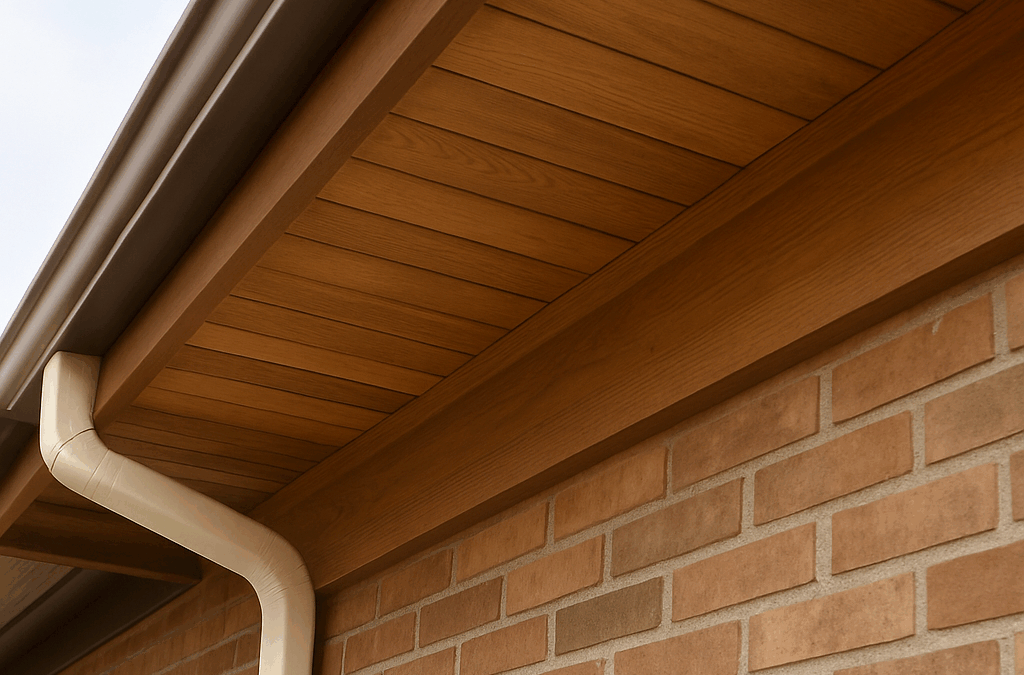
Soffit describes the material covering the underside of any roof overhang or eave. When standing outside your home and looking upward toward where the roof extends beyond exterior walls, the horizontal surface visible between the wall and the fascia board at the roof’s edge is the soffit. When this component consists of wood materials—whether solid lumber boards, plywood panels, or engineered wood products—it is specifically designated as wood soffit.
This architectural element serves dual purposes combining aesthetics with function. Visually, soffit creates a finished, complete appearance by concealing the underside of roof framing members, rafter tails, and roof decking that would otherwise remain exposed. This contributes meaningfully to overall curb appeal and gives homes a professional, complete appearance rather than an unfinished look.
Functionally, soffit provides several critical services. It closes the transition space between roof structures and exterior walls, preventing wildlife from accessing attic areas through open eave cavities. Without proper soffit installation, birds build nests in rafters, squirrels easily enter attic spaces, and insects colonize unprotected areas. Additionally, soffit facilitates controlled attic ventilation through perforated or vented sections that allow fresh outdoor air to enter the attic at the eaves. This incoming air combines with exhaust ventilation at ridge or gable vents to create air circulation that reduces heat buildup, controls moisture levels, and extends roofing system service life.
Wood soffit appears in various configurations reflecting home age, architectural style, and construction methods. Traditional installations feature individual tongue-and-groove boards running perpendicular to exterior walls. Panel systems use plywood or oriented strand board sheets cut to fit between walls and fascia boards. Some wood soffit installations incorporate decorative elements like beadboard patterns that add visual interest and complement architectural styles common throughout Cincinnati’s diverse neighborhoods.
Cincinnati Climate Challenges for Wood Soffit
Cincinnati’s humid continental climate presents specific challenges affecting wood soffit durability and longevity. The city experiences hot, humid summers with average July temperatures in the mid-70s to low 80s and relative humidity frequently exceeding 70%. Winters bring cold temperatures, snow, ice, and freeze-thaw cycling. Cincinnati receives approximately 42 inches of annual precipitation distributed throughout the year, meaning wood soffit faces regular moisture exposure across all seasons.
Wood exhibits hygroscopic properties, meaning it naturally absorbs and releases moisture in response to environmental humidity changes. In Cincinnati’s humid climate, wood soffit continuously absorbs atmospheric moisture during humid periods, causing dimensional expansion as moisture content increases. When drier conditions arrive—whether through seasonal changes or indoor climate control systems—wood releases this moisture and contracts. This perpetual expansion-contraction cycling occurs repeatedly throughout each year, gradually weakening wood structure, loosening fastening systems, and creating cracks or separation gaps.
Sustained moisture exposure creates favorable conditions for biological deterioration. Mold and mildew readily colonize damp wood surfaces, producing discoloration and gradually decomposing wood fibers. More seriously, wood-decay fungi establish themselves in moisture-saturated wood and systematically break down cellular structures, causing rot that destroys material integrity. Cincinnati’s combination of adequate moisture and moderate temperatures provides ideal conditions for these decay organisms.
Insect threats compound climate-related challenges. Carpenter bees are common throughout the Cincinnati area, boring characteristic round holes into wood soffit to create nesting tunnels. Termites, present throughout Ohio, can infest wood soffit when moisture damage creates conducive conditions. Various wood-boring beetles and other insects similarly target vulnerable wood components, creating additional damage and accelerating deterioration.
Typical Wood Soffit Deterioration Patterns
Several characteristic problems commonly affect wood soffit in Cincinnati homes. Wood rot represents the most structurally serious issue. Decay typically initiates where water accumulates or where protective coatings have failed, allowing direct wood-to-moisture contact. Common rot locations include areas beneath gutter overflow points, at joints between soffit sections, around ventilation openings, and anywhere paint has failed. Early-stage rot may appear as slight discoloration or minor softening detectable when probed with sharp tools. Advanced rot creates obviously compromised areas where wood becomes spongy, crumbly, or completely deteriorated, losing all structural capacity.
Paint and finish failures signal impending problems before underlying rot develops. Wood soffit requires protective coatings—typically paint or solid-color stain—to resist moisture penetration. These protective layers gradually degrade through weathering, ultraviolet radiation exposure, and temperature cycling. When coatings fail, exposed bare wood rapidly absorbs moisture. Failed finishes manifest as peeling paint, surface blistering, cracking, or areas where wood grain becomes visible through worn coating. Once protective coverage disappears, wood deterioration accelerates dramatically.
Warping and dimensional distortion occur when wood absorbs moisture unevenly or when fastening systems allow movement during expansion-contraction cycles. Warped soffit boards create wavy, irregular appearances and may separate from mounting surfaces, creating gaps exploitable by pests. Severe warping can cause complete detachment where entire soffit sections pull completely free, leaving attic spaces exposed to weather and animal intrusion.
Discoloration and staining indicate water exposure and potential underlying damage. Dark vertical streaks below gutter edges show where water regularly overflows and cascades across soffit surfaces. Black or greenish patches signal mold or mildew growth in response to persistent dampness. Brown tannin stains appear when water dissolves natural wood compounds and deposits them during evaporation, creating permanent discoloration that persists even after surfaces dry.
Pest damage manifests as visible holes, tunnels, and nesting evidence. Carpenter bees produce perfectly circular entrance holes approximately half an inch in diameter leading to tunnel networks within the wood. Woodpeckers create irregular excavations searching for insects living in soffit. Squirrels sometimes chew soffit edges to enlarge small gaps for attic access.
Effective Wood Soffit Maintenance Strategies
Preserving wood soffit requires consistent attention to both protective coatings and underlying material condition. Regular inspection forms the basis of effective maintenance. Cincinnati homeowners should examine soffit at least annually—preferably during spring or fall when moderate weather makes inspection comfortable. Look for coating deterioration, discoloration patterns, warping, pest activity, or any indications of moisture damage. Focus particular attention on areas below gutters where water exposure is typically greatest.
Protective coating maintenance significantly extends wood soffit lifespan. Quality exterior paints or solid stains create effective moisture barriers when properly applied and maintained. Most coatings require renewal every 5-10 years depending on product quality, exposure severity, and application technique. Recoating projects involve thorough surface cleaning, scraping loose or failing paint, sanding rough areas, priming any exposed bare wood, and applying finish coats according to manufacturer recommendations.
Cleaning removes biological growth and prevents staining from becoming permanent. Gentle washing with mild detergent solutions and soft brushes effectively removes mold, mildew, dirt, and other contaminants without damaging wood or existing finishes. Pressure washing offers efficient cleaning but requires caution—excessive pressure can damage wood grain structure, force water behind soffit into attic spaces, or aggressively strip paint. When using pressure washers, maintain low pressure settings, use wide spray patterns, and avoid directing spray upward into ventilation openings.
Ventilation maintenance ensures proper air circulation through vented soffit sections. Vent openings can become obstructed by insect nests, accumulated dust, spider webs, or inadvertent paint coverage during recoating projects. Blocked vents reduce attic airflow, increasing heat and moisture accumulation that accelerates roof system aging and promotes wood decay. Periodically verify that soffit vents remain clear and functional.
Addressing minor damage promptly prevents progression to major problems. Small cracks benefit from filling with exterior-grade wood fillers or flexible caulking compounds. Loose boards should be refastened using corrosion-resistant screws or nails. Limited areas of early-stage rot can sometimes be treated with wood consolidating products that harden remaining sound material, then filled and refinished, though extensive rot generally necessitates replacement.
Repair and Replacement Considerations
Determining whether to repair or replace deteriorated wood soffit depends on damage extent, overall system condition, and cost-effectiveness. Limited damage affecting only a few boards or small sections often makes selective replacement the practical approach. Widespread deterioration affecting large portions of the soffit system typically makes complete replacement more economical and ensures uniform appearance and performance.
Replacement projects require material decisions. Matching existing wood profiles and species maintains original architectural appearance but may prove challenging for older Cincinnati homes with custom millwork or discontinued products. Some homeowners choose replacement using modern alternative materials like vinyl or aluminum soffit that offer superior weather resistance and minimal maintenance requirements, though this changes the home’s original character and appearance.
Proper installation proves critical for replacement project success. Soffit must be adequately fastened to prevent wind damage, properly ventilated to support attic airflow requirements, and correctly flashed where it meets walls and fascia to prevent water infiltration. Soffit replacement frequently coordinates with related exterior projects—gutter replacement, fascia repair, or roofing work—since these systems interconnect. Addressing all related components simultaneously ensures comprehensive protection and may reduce overall costs compared to sequential individual repairs.
Comparing Wood to Alternative Soffit Materials
Understanding wood soffit characteristics benefits from comparison with alternative materials available for soffit applications. Vinyl soffit provides excellent moisture resistance, requires no painting maintenance, and effectively resists biological decay and insect damage. However, vinyl can become brittle over extended time periods, may crack when impacted, and offers limited color selections that cannot be changed through painting. Aluminum soffit delivers excellent durability, fire resistance, and long-term performance but costs more initially than most other options and can dent from hail or impact damage. Fiber cement soffit combines attractive wood-like appearance with superior weather resistance but weighs considerably more than other alternatives and costs significantly more than traditional wood.
Wood soffit, despite its maintenance demands, offers aesthetic warmth and authentic architectural character that synthetic materials cannot perfectly duplicate. For Cincinnati historic properties or homes where maintaining original architectural integrity and authenticity matter significantly, properly maintained wood soffit preserves character and value that modern alternatives might compromise.
Conclusion
Wood soffit serves essential protective and aesthetic functions on Cincinnati, Ohio homes, yet often receives insufficient maintenance attention until obvious problems develop. Gutters Etcetera knows that Cincinnati homeowners equipped with understanding of wood soffit’s purpose, climate-related vulnerabilities specific to the region, and appropriate maintenance requirements can better preserve this critical architectural component. While wood soffit demands more regular attention than modern synthetic alternatives, proper maintenance practices, timely intervention when damage appears, and informed decisions about repair versus replacement enable property owners throughout the Cincinnati area to effectively protect their homes while maintaining the authentic character and architectural integrity that wood components provide to residential structures across the community.