
Cincinnati, Ohio homeowners considering exterior repairs, renovations, or new construction frequently encounter vinyl soffit as the recommended material for finishing roof eaves and overhangs. This synthetic material has become the standard choice in residential construction, yet many property owners have limited understanding of what vinyl soffit actually is, why it has achieved such dominance, or how it performs compared to traditional alternatives. Gutters Etcetera regularly educates Cincinnati-area homeowners about vinyl soffit characteristics, helping them understand this important exterior component’s properties, advantages, limitations, and maintenance requirements. Comprehensive knowledge about vinyl soffit enables property owners to make informed decisions aligned with their specific needs, budgets, and long-term property goals.
What Vinyl Soffit Is
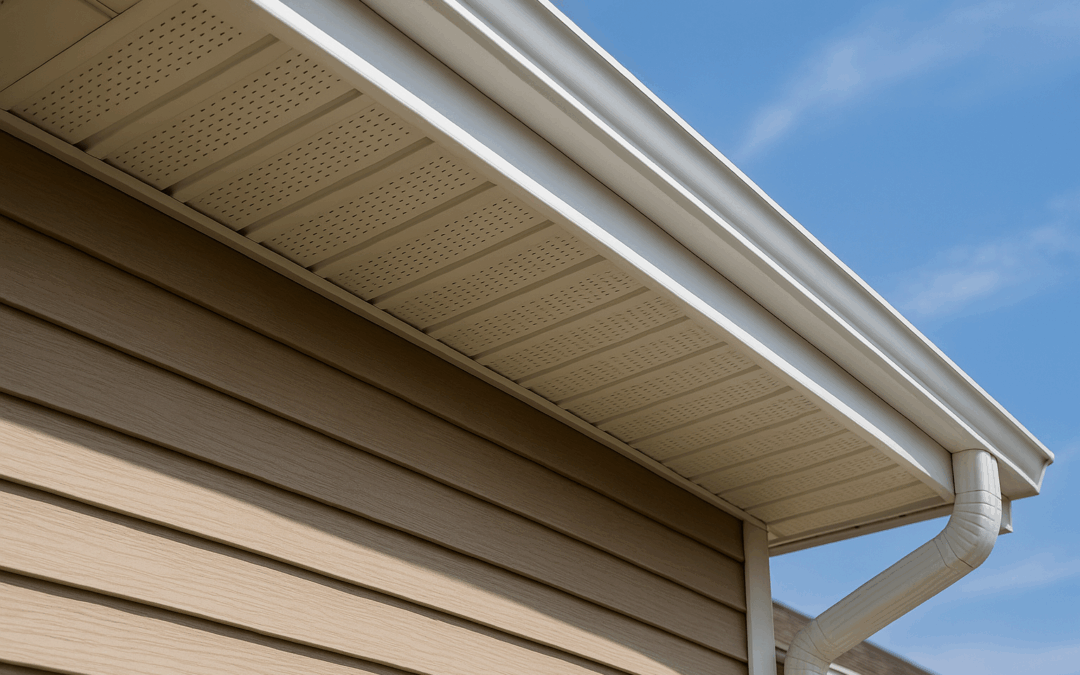
Soffit describes the material that covers the underside of any overhanging architectural feature, most commonly the horizontal surface beneath roof eaves where rooflines extend beyond exterior walls. When standing outside your home and looking upward at the eaves, the material visible between the exterior wall and the fascia board at the roof edge is the soffit. Vinyl soffit specifically refers to this component when manufactured from polyvinyl chloride plastic rather than wood, metal, or cementitious materials.
The development of vinyl soffit followed the broader introduction of vinyl as a building material in the mid-twentieth century. Manufacturers sought durable, low-maintenance alternatives to wood products that required regular painting and were vulnerable to rot and insect damage. Vinyl soffit is produced through extrusion manufacturing processes where PVC resin is heated until molten, then forced through shaped dies creating specific profiles. The continuous extruded material is cooled and cut into standard lengths producing uniform panels. Colors and UV stabilizers are incorporated into the vinyl during manufacturing, creating integral color that requires no painting and resists fading.
Vinyl soffit serves the same fundamental purposes as soffit made from any material. From an aesthetic perspective, it creates finished, professional appearances by concealing structural roof elements including rafters, trusses, and the underside of roof decking. This contributes meaningfully to curb appeal and overall exterior appearance quality. Functionally, vinyl soffit closes the gap between roof structures and exterior walls, preventing wildlife including birds, squirrels, bats, and insects from accessing attic spaces through open eaves. Most importantly, perforated vinyl soffit panels provide critical attic ventilation, allowing fresh air to enter at eaves and exit through ridge or gable vents, creating air circulation that reduces heat buildup and controls moisture accumulation.
Vinyl soffit comes in several standard types. Solid panels without perforations provide weather protection without ventilation, appropriate for porch ceilings or situations where attic ventilation is achieved through alternative means. Fully perforated panels maximize ventilation with holes across entire panel surfaces. Partially perforated panels feature ventilation strips with solid borders, balancing airflow with appearance. Standard panel widths include twelve inches and sixteen inches, with typical lengths from twelve to twelve-and-a-half feet.
Why Vinyl Soffit Suits Cincinnati’s Climate
Cincinnati’s humid continental climate creates conditions where vinyl soffit offers specific advantages over traditional materials. The city experiences warm, humid summers with average July temperatures in the mid-70s to low 80s and relative humidity frequently exceeding 70%. Winters bring cold temperatures, snow, ice, and freeze-thaw cycles. Cincinnati receives approximately 42 inches of annual precipitation distributed throughout the year, creating regular moisture exposure for all exterior components.
Vinyl’s fundamental advantage is complete moisture impermeability. Unlike wood that absorbs water and subsequently rots, or unprotected steel that corrodes, vinyl is unaffected by moisture contact. It cannot absorb water, will not rot or decay, and provides no substrate supporting biological organisms like mold, mildew, or wood-decay fungi. In Cincinnati’s moisture-rich environment where wood historically deteriorates rapidly, vinyl’s inherent resistance to moisture-related damage offers significant practical benefits.
Maintenance requirements for vinyl soffit are dramatically lower than wood alternatives. Wood soffit requires regular painting or staining every 5-10 years depending on exposure and coating quality. It needs periodic inspection for rot, prompt damage repair, and constant vigilance against deterioration. Vinyl eliminates these burdens. It never requires painting because color is integral to the material itself. While vinyl surfaces can accumulate dirt or develop superficial biological growth, simple cleaning with common household products typically restores appearance without extensive preparation or coating application.
Vinyl resists pest damage that commonly destroys wood soffit. Carpenter bees, prevalent throughout the Cincinnati region, cannot bore nesting tunnels into vinyl. Termites derive no nutritional value from plastic. Woodpeckers cannot excavate synthetic materials. This immunity to insect and animal damage provides reliable protection without ongoing monitoring and intervention.
Economic considerations favor vinyl in most applications. Vinyl soffit material costs typically run lower than wood, aluminum, or fiber cement alternatives. Installation costs are generally comparable or lower due to vinyl’s lightweight nature and straightforward installation procedures. Long-term economics favor vinyl even more substantially when eliminating painting expenses, reducing repair costs, and considering extended service life compared to wood products.
Vinyl Soffit Limitations and Drawbacks
Despite significant advantages, vinyl soffit has limitations that Cincinnati homeowners should consider when making material decisions. Temperature extremes affect vinyl differently than traditional materials. Extreme heat can make vinyl pliable, potentially causing sagging in improperly installed panels or those that were over-fastened. While Cincinnati’s summer temperatures rarely reach truly problematic levels for vinyl, prolonged direct sun exposure on dark-colored panels can occasionally create localized softening.
Cold temperatures present more significant concerns. Vinyl becomes brittle when frozen, making it susceptible to cracking if impacted during winter months. Cincinnati winters regularly bring temperatures into the twenties and teens, sometimes dropping into single digits—cold enough to make vinyl fragile. Impacts from ladders, falling branches, ice, or hail during these cold periods can crack panels that would resist identical impacts in warmer weather.
Thermal expansion and contraction occur more dramatically with vinyl than most building materials. Cincinnati’s temperature variations between summer highs and winter lows can cause vinyl panels to expand or contract by half an inch or more across twelve-foot lengths. Proper installation must accommodate this movement through correct expansion gaps and appropriate fastening techniques. Improperly installed vinyl may buckle during expansion or separate from mountings during contraction.
Color selections, while adequate, are more limited than unlimited paint options available for wood or fiber cement. Vinyl colors are permanent—molded into the material and unchangeable. If homeowners want different colors or existing colors fade unacceptably, complete replacement is necessary. Modern vinyl formulations include UV inhibitors that substantially reduce fading compared to earlier products, but some color change remains inevitable over decades, particularly with darker colors.
Aesthetic authenticity concerns some homeowners. While vinyl can be textured to simulate wood grain, close inspection reveals its synthetic nature. For Cincinnati’s historic properties or homes in preservation-conscious neighborhoods where maintaining period-appropriate materials affects values and character, vinyl’s obviously artificial appearance may be inappropriate.
Environmental considerations surround vinyl production and disposal. PVC manufacturing involves chemical processes with documented environmental impacts. End-of-life vinyl contributes to landfill waste, though recycling capabilities for vinyl building materials continue expanding.
Vinyl Soffit Installation Best Practices
Proper installation is essential for vinyl soffit performance and longevity. Unlike wood that can be fastened firmly in place, vinyl requires installation techniques accommodating thermal movement. Fasteners must be positioned in nailing slot centers rather than at ends, allowing panels to shift during expansion and contraction. Fasteners should not be driven tightly—leaving approximately 1/32 inch between fastener heads and vinyl surfaces allows necessary movement.
Expansion gaps must be maintained wherever panel ends meet trim, J-channels, or accessories. Typically, 1/4 inch gaps accommodate seasonal movement, increasing for cold-weather installations when panels are contracted and decreasing for warm-weather installations when panels are already expanded. Cincinnati’s temperature extremes require careful attention to these details.
Ventilation calculations ensure adequate attic airflow meeting code requirements. Building codes typically specify one square foot of net free ventilation area per 150 square feet of attic space, with balanced intake and exhaust. Selecting appropriate perforated soffit types and ensuring adequate coverage provides compliant ventilation supporting roof system longevity and energy efficiency.
Maintaining Vinyl Soffit
Vinyl soffit maintenance centers on periodic cleaning and inspection. Cincinnati’s humidity promotes biological growth on exterior surfaces. Annual or semi-annual washing with mild detergent solutions removes mold, mildew, dirt, and environmental deposits. Soft brushes or gentle pressure washing effectively cleans vinyl, though excessive pressure should be avoided to prevent forcing water behind panels or damaging interlocking edges.
Regular inspections identify problems early. Check for loose or damaged panels, particularly after severe weather. Verify perforations remain clear and unobstructed. Look for cracks or damage, especially following winter weather when cold-induced brittleness increases vulnerability. Examine areas where soffit meets trim or walls for gaps allowing pest entry.
Repairs typically involve replacing damaged panels rather than attempting fixes. Vinyl’s interlocking design usually allows individual panel replacement without disturbing adjacent sections. Keeping spare panels from original installation enables exact matching, important because manufacturers occasionally discontinue specific colors or profiles.
Comparing Vinyl to Other Soffit Materials
Vinyl characteristics become clearer through comparison with alternatives. Wood soffit offers natural beauty and unlimited paint colors but requires extensive maintenance, remains vulnerable to moisture and insects, and costs more long-term. Aluminum soffit provides excellent durability, fire resistance, and weather performance without painting but costs substantially more and can dent. Fiber cement soffit combines durability with authentic appearance and paintability but weighs much more, costs considerably more, and requires periodic repainting.
Vinyl represents a practical middle option—more durable and lower maintenance than wood, more affordable than aluminum or fiber cement, but with aesthetic and temperature sensitivity compromises. For most Cincinnati homeowners prioritizing practical performance and affordability over premium materials or absolute authenticity, vinyl offers appropriate balance.
Conclusion
Vinyl soffit has become the standard choice for residential soffit applications throughout Cincinnati, Ohio, and the surrounding region, providing homeowners with practical combinations of affordability, durability, and minimal maintenance. Gutters Etcetera recognizes that Cincinnati-area property owners who understand vinyl soffit’s characteristics, advantages, and limitations can make better-informed decisions about new construction, renovation projects, or soffit replacement needs. While vinyl may not suit every application—particularly historic restorations or situations demanding authentic materials—its moisture resistance, pest immunity, and low maintenance requirements make it appropriate for most residential applications throughout the Cincinnati area. Whether planning new construction, replacing deteriorated soffit, or simply seeking to understand existing home components, knowledge about vinyl soffit performance in regional climate conditions supports wise property management and investment decisions.