
Cincinnati homeowners frequently encounter gutter guard recommendations as maintenance-reducing solutions for their drainage systems, yet considerable confusion persists about what various guard types actually accomplish, whether marketing promises of “maintenance-free” gutters reflect reality, and what real performance differences exist between diverse products available on the market. For homes in Cincinnati, OH, where regional tree coverage, significant annual rainfall, freeze-thaw winter cycles, and occasional severe weather create specific environmental challenges for gutter systems, understanding gutter guard technology, different system designs, their realistic capabilities and honest limitations, and expectations about ongoing maintenance provides essential knowledge for informed decision-making about guard investments. Gutters Etcetera of Cincinnati, OH presents this comprehensive educational guide explaining what gutter guards are, how different designs function, what benefits they can deliver, what challenges they present, and what homeowners should understand about actual performance in Cincinnati’s specific climate conditions.
Understanding Gutter Guards and Their Purpose
Gutter guards, also called leaf guards, leaf filters, or gutter covers, are protective systems installed over or within gutter channels to prevent leaves, twigs, seeds, and debris from accumulating while allowing water to flow freely into gutters. The fundamental objective is reducing maintenance requirements by minimizing debris buildup that would otherwise necessitate frequent cleaning. Effectively designed guards aim to extend intervals between cleanings, reduce overflow potential during heavy rain, minimize ice-related problems during winter, and protect gutter systems from debris weight and organic decay damage.
The numerous guard designs reflect different engineering approaches to the same fundamental problem: blocking debris while maintaining water flow capacity. Some use fine-mesh screens, others employ surface-tension technology relying on water’s physical properties to direct it into gutters while debris slides away, and still others use solid covers with small openings designed to exclude debris while permitting water passage. This design diversity reflects the reality that no single approach perfectly achieves complete debris exclusion while maintaining unrestricted water flow—all guards represent compromises between competing objectives.
Gutter guards span an enormous range in quality, cost, and actual performance. The term encompasses everything from inexpensive temporary mesh screens homeowners install themselves to professional-grade engineered systems costing thousands for complete home installation. This tremendous variation means that “gutter guard” describes virtually nothing about actual performance—some products deliver substantial real benefits while others provide minimal protection despite significant cost, and some create new problems while solving none.
Cincinnati Climate Factors Affecting Guard Performance
Cincinnati’s environmental conditions directly influence how gutter guard systems perform. The city has abundant tree coverage with diverse species—oaks, maples, ashes, hickories, sycamores, and pines—that collectively generate substantial seasonal debris. Oaks drop acorns and leaves heavily with ongoing twig generation. Maples shed seeds in spring and leaves in fall. Pines shed needles year-round. This diverse, continuous debris generation challenges guard systems more severely than regions with less tree coverage.
Cincinnati’s humidity combined with warm summer temperatures creates ideal conditions for biological growth on gutter systems. Mold, algae, mildew, and fungal organisms readily establish on moist surfaces, and many guard designs—particularly fine-mesh systems—trap moisture and organic material promoting growth. Biological colonization progressively clogs guards and creates unsightly staining. This biological challenge is more pronounced in Cincinnati’s humid climate.
The city receives approximately forty-two inches of annual precipitation, with spring and summer storms delivering intense short-duration rainfall. Individual storms can bring multiple inches in hours, creating peak water volumes potentially exceeding many guard designs’ intake capacity. When guards cannot accept water quickly enough, water backs up and overflows, potentially causing the very problems guards are intended to prevent. Evaluating guard performance during realistic high-rainfall conditions is essential for Cincinnati properties.
Winter freeze-thaw cycles create challenges for guard systems. Water infiltrating guard seams freezes and expands, potentially damaging attachment points or warping guards. When guards become iced, they prevent water drainage during thaw, creating backup and potential interior infiltration.
Different Gutter Guard Types
Understanding various guard designs helps evaluate realistic performance.
Mesh and Screen Guards
Mesh screens use woven material to filter debris while allowing water passage. Sizes vary from open screens to fine micro-mesh. These appeal through low cost and DIY installation ease.
Limitations include that fine mesh clogs with organic material, pollen, and grit, progressively reducing effectiveness. In Cincinnati’s humid climate, organic accumulation promotes mold growth further restricting flow. Coarser mesh allows fine debris through, requiring similar cleaning as systems without guards. Most mesh systems require periodic guard maintenance themselves, reducing promised benefits. Wet leaves mat against mesh, becoming difficult to remove.
Surface-Tension Reverse-Curve Guards
Curved hood designs allow water to curve downward while debris slides off. This relies on water’s cohesive properties.
Advantages include minimal debris entry points and natural shedding of large items. Limitations include that heavy rainfall may exceed intake capacity, causing backup and overflow. Wet leaves stick to curves. Fine debris still accumulates below. Regular maintenance is still necessary. Ice can form behind guards during winter thaw cycles.
Foam Insert Systems
Porous foam cut to gutter dimensions allows water passage while debris stops at the surface.
Limitations include that wet leaves mat against foam and resist removal. Foam degrades from UV exposure and biological colonization, typically requiring replacement every five to ten years. Water flow can be slower than optimal. Foam becomes a debris collection point itself.
Perforated Solid Cover Systems
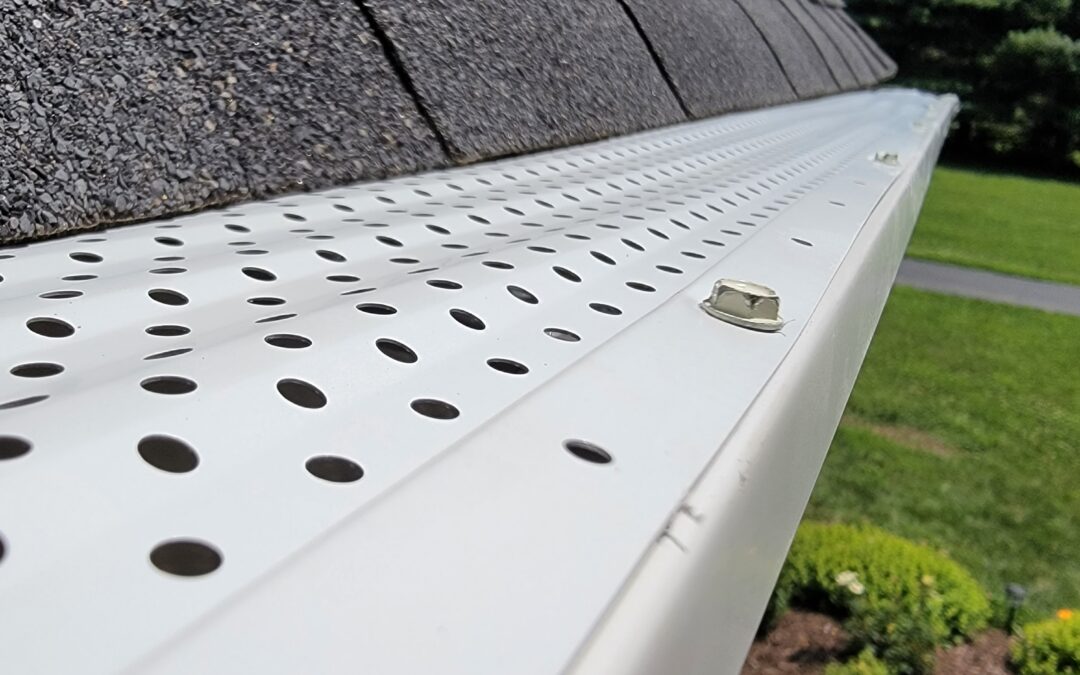
Solid covers with small slots attempt to exclude debris while passing water.
The challenge is balancing slot size—smaller openings exclude debris but reduce flow, larger openings maintain flow but allow debris. Real performance falls between ideal and disappointing. Slots clog with decomposing material. Some designs create turbulence increasing overflow potential.
Professional Systems
High-end engineered systems typically combine quality materials and sophisticated designs. These cost more but often deliver better performance and durability.
Premium systems justify investment for properties with significant tree coverage or those planning long-term residence, as reduced cleaning frequency and improved performance over twenty-five years provides better value.
Benefits and Limitations
Legitimate Benefits
Homes with moderate tree coverage may reduce cleaning frequency. Guards keep larger leaves and branches out, reducing weight stress on systems. They can reduce ice dam potential by maintaining winter water flow. They may extend gutter service life. They reduce pest and wildlife attraction.
Honest Limitations
No guard completely eliminates all debris. Most require periodic guard maintenance. Guards underperform during intense rainfall. Performance depends on proper installation. For many properties, guard costs may not justify cleaning savings.
Evaluating Guards for Cincinnati
Tree Coverage
Minimal nearby trees suggest limited benefit. Moderate coverage may justify guards. Heavy tree coverage may see limited benefit as some debris is inevitable.
Debris Type
Different trees produce different debris. Research what your trees produce and how guards handle that specific debris.
Maintenance Tolerance
Consider whether you’ll perform guard maintenance and factor that cost into decisions.
Total Cost of Ownership
Calculate complete costs including installation, replacement, and maintenance against professional cleaning service costs.
Gutter System Integration
Guards make sense as part of overall gutter planning, not on systems nearing replacement.
Conclusion
Gutter guards represent products with significant performance variation, broad cost range, and highly situation-dependent effectiveness. Gutters Etcetera of Cincinnati, OH encourages homeowners to understand that guards reduce but don’t eliminate cleaning needs, perform differently in Cincinnati’s climate, and may or may not provide sufficient benefit depending on circumstances. Thoughtful evaluation of property factors, honest assessment of ongoing guard maintenance, and realistic expectations about actual performance helps ensure any guard investment delivers meaningful value. This educational overview is provided to inform homeowner decision-making without suggesting guards are universally necessary or appropriate for all properties.