
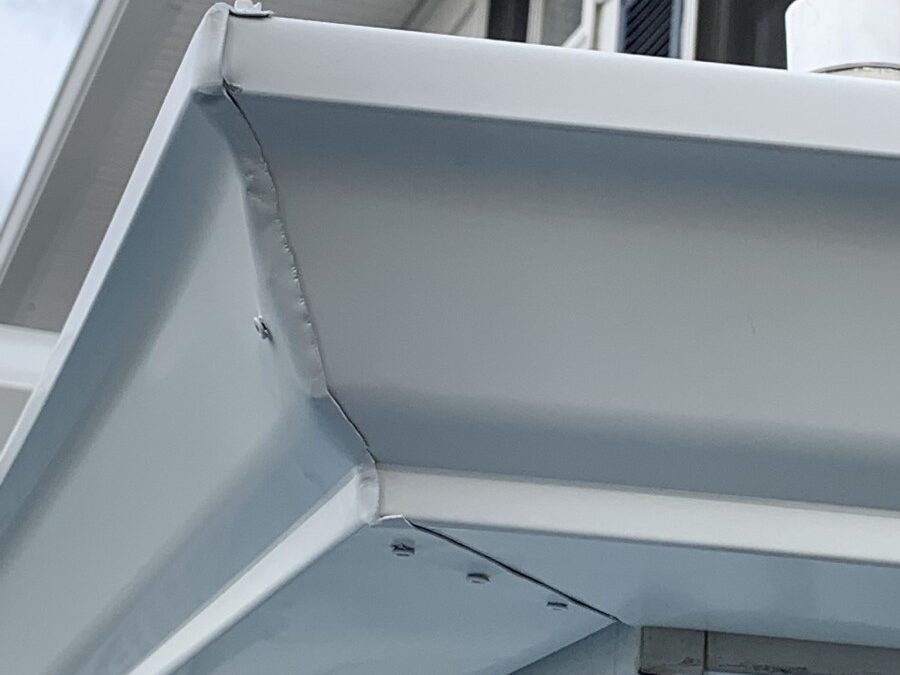
A gutter system is designed to collect roof runoff and guide it toward downspouts, but many roofs do not have simple straight lines. Homes often include corners, porches, additions, bay windows, intersecting roof planes, and other architectural features that require gutters to change direction. These changes are managed through components called gutter miters. Inside and outside miters connect gutter sections at corners and help water continue along the roofline. Because they are sealed connection points, miters are among the most common locations for gutter leaks and overflow. Gutters Etcetera believes Cincinnati, Ohio homeowners benefit from understanding how gutter miters work, what can cause them to fail, and why post-storm and seasonal inspections should include every roofline corner.
Gutter Miter Basics
A gutter miter is an angled connector between gutter runs. It follows the shape of the roofline and creates a transition for water.
An outside miter is installed where a gutter wraps around an outward-facing corner. This is the type most people recognize when looking at the corner of a rectangular home.
An inside miter is installed where two gutter runs meet at an inward-facing roof corner. These may appear at L-shaped sections of a house, around porches, where additions connect to the main structure, or at other recessed roofline areas.
Miters may be preformed or fabricated to match a specific angle. Regardless of design, they need to remain aligned, properly supported, and sealed. If any of those conditions changes, water may escape from the corner instead of continuing to the downspout.
Why Cincinnati Weather Can Affect Gutter Corners
Cincinnati’s four-season climate creates several conditions that can affect gutter miter connections. Rainfall, wind, seasonal temperature swings, falling debris, and winter ice all place stress on gutter corners.
Heavy rain can reveal leaks that are not noticeable during lighter precipitation. When large volumes of water move through a gutter, pressure increases at turns and seams. A small gap in sealant may release a steady drip during a heavy storm.
Temperature changes affect gutter materials over time. Aluminum expands in warm weather and contracts during cold weather. Cincinnati’s temperature range, including hot summer days and winter freezing conditions, creates repeated movement that can gradually stress sealant and joints.
Freeze-thaw cycles are especially relevant at gutter corners. Water that enters a small seam or remains trapped in debris around a miter can freeze during cold weather. As water freezes, it expands. Repeated expansion and thawing can widen small gaps and place additional stress on the miter connection.
Wind and falling branches can also shift gutters. Cincinnati’s mature canopy includes sycamores, oaks, beeches, maples, and other large hardwoods. Branch impact may bend a gutter section or loosen hangers near a corner, causing the miter to move out of alignment.
Inside Miters and Roof Valley Runoff
Inside miters often need to manage high water volume because they may be located below roof valleys. A roof valley concentrates water from two roof planes and sends it to one point along the gutter system.
During a strong Cincinnati storm, an inside corner below a valley may receive a rapid rush of water. If the miter area is blocked with leaves or seed balls, if the gutter slope is poor, or if the downspout is restricted, water can rise and overflow.
Homeowners should distinguish between two different observations:
- Water dripping from the seam may indicate a sealant or connection issue.
- Water spilling over the gutter edge may indicate a drainage capacity or blockage issue.
Both situations deserve attention, but they may have different causes. A miter can be well-sealed and still overflow if debris prevents water from moving through the channel quickly enough. Conversely, a clean gutter can still leak through a failing seam.
Outside Miters and Foundation-Adjacent Drips
Outside miters commonly create concentrated drips at exterior corners. These drips may stain siding, brick, or trim, and they can wash mulch or soil away from landscaping below.
For Cincinnati homes with basements, repeated corner discharge is worth observing. Water that consistently falls near the foundation can contribute to saturated soil conditions, especially during wet seasons. On Cincinnati’s many sloped lots, runoff from a corner leak may travel downhill and collect along a basement wall or retaining structure.
A small leak can become more significant when it occurs in the same place through many rainstorms. The overall quantity of water released may be limited compared with total roof runoff, but its concentration at a vulnerable location can create noticeable erosion and moisture patterns.
Signs of Gutter Miter Problems
Homeowners can often inspect gutter corners from ground level, particularly after rain. Useful warning signs include:
- Dripping below an inside or outside corner
- Stains or streaks beneath a miter
- White mineral residue on brick or masonry
- Rust-colored marks near metal seams
- Visible gaps or separation at a corner connection
- Sealant that appears cracked, missing, or detached
- Leaves and debris packed into a corner
- Water overflowing at a roofline turn
- Gutter sagging next to the miter
- Fascia paint peeling behind a corner
- Erosion or mud splatter below the gutter corner
Recurring conditions are especially meaningful. If a corner drips after every rain event, or if the same inside miter overflows during storms, the pattern indicates that the area should be evaluated rather than treated as an isolated weather event.
The Role of Hangers and Fascia Boards
Miters need stable support from the adjacent gutter sections. If hangers are loose or spaced too far apart near a corner, the gutter can flex. That movement can pull against the miter seam and gradually weaken the seal.
Fascia board condition is equally important. Most gutter hangers attach to the fascia. If water has been leaking behind the gutter or overflowing at the corner, the fascia may become soft or deteriorated. Loose fasteners may then allow the gutter to pull away, creating further misalignment.
A miter leak may therefore be connected to more than sealant. The gutter slope, hanger condition, fastener security, and fascia integrity should all be considered when a corner repeatedly leaks or sags.
Debris Traps at Gutter Corners
Corners naturally slow the movement of debris. Leaves, twigs, roofing granules, seed balls, and small branches may settle where water turns. Cincinnati’s sycamore seed balls can be especially problematic because they can lodge near corners or downspout inlets and trap other debris behind them.
Wet debris reduces gutter capacity and holds moisture against the channel. It can also hide a failing seam from view. Cleaning gutters should include clearing miter areas thoroughly, particularly inside corners and locations below roof valleys.
Fall is an important inspection season in Cincinnati because leaves and seed material can collect heavily before winter. Removing debris from corners before freeze-thaw conditions begin can reduce standing water and ice buildup at miter connections.
Sealant Is Important, but It Is Not the Entire Solution
Sealant helps make gutter corner joints watertight. However, it needs a clean, dry, stable surface to perform well. Old cracked sealant, damp surfaces, oxidation, and debris can interfere with adhesion.
Sealant also cannot correct major movement in a gutter system. If the miter is separating because the gutter is sagging, pulling away from damaged fascia, or affected by loose hangers, the underlying support issue should be considered along with the joint itself.
Conclusion
Inside and outside miters are essential gutter components that allow Cincinnati homes to manage roof runoff around corners, porches, additions, and changing rooflines. Because miters are connection points exposed to water flow, debris, temperature movement, and winter ice, they are common places for leaks and overflow to develop. For Gutters Etcetera and Cincinnati, Ohio homeowners, checking roofline corners for drips, staining, failed sealant, debris buildup, sagging, and erosion can provide valuable insight into gutter performance. Paying attention to these small connections helps homeowners better understand how water is moving around the home during Ohio Valley rainstorms and changing seasonal conditions.