
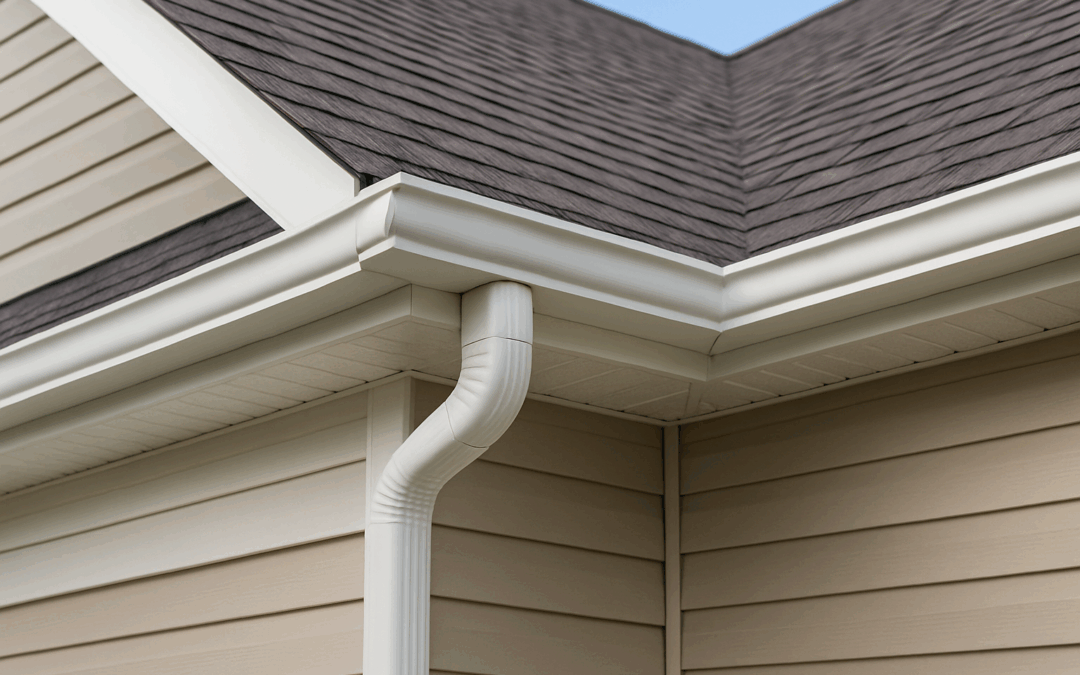
Louisville, Kentucky homeowners maintaining the exterior of their homes frequently focus gutter system attention on the horizontal channel running along the roofline — cleaning it, checking its slope, and inspecting its fasteners. The downspout, the vertical pipe that collects water from the gutter channel and carries it from the roofline to ground level, is equally important to the complete system’s water management performance and equally deserving of deliberate attention. In Louisville’s demanding four-season Ohio Valley climate — with its heavy spring rainfall, summer heat stressing sealant materials, and winter freeze-thaw cycling creating ice loading stress on every gutter system component — downspout performance, sizing, and maintenance have direct consequences for the protection of foundations, fascia, and structural materials throughout every season. Cardinal Gutters believes that Louisville-area homeowners benefit from a thorough understanding of what downspouts do, how they should be sized and placed, what maintenance they require, and what consequences develop when downspout function is inadequate in Louisville’s particular climate.
What Downspouts Do and Why They Matter
A downspout receives water collected by the horizontal gutter channel and conveys it vertically from the roofline to ground level, where extensions and discharge management direct it away from the structure. This role as the drainage outlet of the gutter system makes the downspout’s capacity, condition, and discharge effectiveness foundational to the complete system’s protective performance.
The relationship between gutter channel capacity and downspout drainage capacity is direct and consequential: a gutter channel that collects roof runoff effectively can only drain as fast as its downspouts allow. When downspout capacity is insufficient for the rainfall rate the roof is receiving — whether because downspouts are undersized, blocked, or too few for the run length served — the gutter channel fills and overflows. This overflow reaches the fascia, soffit, foundation perimeter, and landscape in concentrated volumes, negating the protection the gutter system was installed to provide. In Louisville, where spring thunderstorms can deliver one to two or more inches of rain per hour and where the Ohio Valley’s summer heat accelerates the gutter sealant degradation that contributes to joint leaks, the adequacy of downspout capacity and condition directly determines how effectively the gutter system protects the home during the events that matter most.
Beyond their drainage function, downspouts concentrate dispersed roof runoff — collected from large roof surface areas through the gutter channel — into specific discharge points whose location can be deliberately managed. This concentration and localization function allows homeowners and installers to direct roof runoff specifically away from foundations, toward appropriate drainage features, and away from landscape elements sensitive to concentrated water — but only if downspout discharge location and ground-level management are addressed intentionally rather than incidentally.
Sizing Downspouts for Louisville’s Rainfall
Downspout sizing must provide adequate cross-sectional flow area to drain the roof area served at local peak rainfall intensity rates. Standard residential downspout options include 2×3 inch and 3×4 inch rectangular profiles and 3 or 4 inch round profiles. The appropriate size for a specific application depends on the roof drainage area served by each outlet, the local design rainfall intensity used for system sizing, and the gutter channel profile.
Louisville’s annual precipitation of approximately 45 inches, delivered in part through high-intensity spring and summer storm events capable of generating peak roof runoff rates well above average, argues for downspout sizing calibrated to peak event conditions rather than average rainfall rates. Undersized downspouts that drain adequately during moderate rainfall but create overflow conditions during intense spring thunderstorms are a sizing inadequacy, not a maintenance problem — and addressing them requires system modification rather than cleaning. Louisville homeowners who observe consistent overflow during intense events despite clean, unobstructed gutters and adequate slope should consider whether downspout sizing and spacing are adequate for their roof area and Louisville’s rainfall intensity profile.
Placement and Spacing in Louisville Homes
Downspout placement along gutter runs affects both drainage efficiency and the location where roof runoff is discharged at ground level — with both factors having practical consequences for Louisville homes.
Run Length and Spacing: General industry guidance recommends maximum downspout spacing of 30 to 40 feet along gutter runs, with specific applications informed by roof drainage area, gutter slope, and rainfall intensity. Louisville’s high spring rainfall intensity argues for placement at the closer end of standard spacing ranges. Very long runs serving large roof areas with single downspouts may develop inadequate drainage in distant run sections during peak events even when the downspout itself is clean and unobstructed.
Foundation Discharge Direction: Louisville’s residential topography varies significantly across the metropolitan area — from flat or gently sloping lots in suburban developments to steeply graded hillside properties in the Highlands and other established neighborhoods. Downspout placement must account for ground-level grade when positioning discharge points: flat areas near the foundation where discharged water pools rather than moving away from the structure provide minimal foundation moisture protection regardless of how well the vertical downspout functions. On sloped Louisville properties, discharge should be directed away from the structure on the downslope side where possible, with care taken not to concentrate discharge in ways that create erosion problems on steeper grades.
Clay Soil Considerations: Much of Louisville’s metropolitan area sits on Ohio Valley clay soils that expand significantly when wet and contract when dry. Downspout discharge concentrated near the foundation perimeter in these soils contributes to the shrink-swell cycling that creates movement stress on foundation structures over time. Maximizing the distance between downspout discharge and the foundation perimeter — through adequately extended surface extensions or underground drainage systems — is particularly important in Louisville’s clay soil environment.
Downspout Extensions and Underground Drainage in Louisville
Downspout extensions — rigid or flexible pieces that attach to the downspout outlet and direct discharge horizontally away from the foundation — are an essential component of complete downspout function that Louisville homeowners should understand and maintain.
Rigid aluminum extensions provide fixed-direction discharge away from the foundation and are durable in Louisville’s climate across all seasons. Flexible corrugated plastic extensions allow adjustable discharge direction but can be displaced by foot traffic, soil movement, or landscape maintenance activity, requiring periodic checking to confirm they remain properly positioned. Both types should direct discharge a minimum of four to six feet from the foundation, with greater distances providing more positive protection in Louisville’s clay soil environment.
Underground downspout drainage — buried pipes connecting downspout outlets to remote discharge points — is an effective option for Louisville homes where surface grade does not facilitate adequate extension of surface discharge away from the foundation, where landscape design makes surface extensions impractical, or where foundation moisture management is a priority concern. Underground systems require periodic inspection of outlet emitters to confirm they are open and discharging freely — blocked underground outlets create hydrostatic conditions in the buried pipe that can back water up into the downspout and gutter during heavy rainfall.
Winter Performance: Louisville’s Distinctive Downspout Challenge
Louisville’s winter climate creates specific downspout performance considerations that distinguish its maintenance needs from warmer climates. The Ohio Valley’s regular freeze-thaw cycling — temperatures cycling repeatedly above and below freezing across winter weeks — creates conditions where water in downspouts freezes during cold periods and thaws during warmer intervals.
Downspout sections most vulnerable to ice formation are those with horizontal runs — at elbows and offset sections where water can pool rather than draining by gravity — and sections in deeply shaded or north-facing wall exposures where ambient temperatures remain below freezing longer during cold events. Ice blockage in these sections prevents drainage when roof ice and snow melt during warm intervals, backing water up into the gutter channel and contributing to overflow at precisely the times when the roofline is also most vulnerable to ice dam conditions.
Ice loading in downspouts — the weight of ice accumulated within debris-laden downspouts or at gutter-to-downspout transitions — also contributes to the mechanical stress on downspout joints, elbows, and fasteners that Louisville’s winter freeze-thaw cycling produces. Post-winter inspection of downspout joint integrity, elbow connections, and wall fasteners identifies damage that winter conditions caused before spring’s heavy rainfall season reveals it through active leaking.
Common Downspout Problems and What to Look For
Inlet Blockages at Gutter Outlets: The transition from gutter channel to downspout inlet — where the gutter outlet opening feeds into the top of the downspout — is the location most vulnerable to blockage by organic debris. In Louisville’s mixed hardwood canopy environment, leaves, seed material, and other organic debris accumulate at downspout inlets and can create blockages that prevent drainage even when the downspout pipe itself is clear. Inlet blockages cause gutter overflow and are a primary cause of water reaching the fascia and foundation perimeter during rainfall events.
Separated Joints: Thermal cycling across Louisville’s temperature range works downspout section joints loose over time. Separated joints allow water to exit the downspout between sections, directing discharge onto wall and fascia surfaces at the separation location. Joints separating behind the downspout — in the gap between the downspout and the wall surface — are particularly damaging because they direct water precisely onto the fascia and structural materials the downspout is meant to move water away from.
Damaged Elbows: Downspout elbows — the angled connecting pieces at wall offset sections and at the ground-level transition from vertical to extension — are vulnerable to blockage by debris that passes through straight sections and to physical damage from yard equipment and foot traffic at grade level. Damaged elbows redirect discharge onto wall surfaces or interrupt downspout drainage at the point closest to the foundation, producing exactly the foundation perimeter moisture conditions the system is designed to prevent.
Seasonal Maintenance Recommendations
Louisville’s four-season climate creates a year-round downspout maintenance calendar aligned with seasonal weather demands. Pre-spring maintenance — flushing downspouts and clearing inlet blockages before the March to May peak rainfall season — ensures maximum drainage capacity entering the year’s most demanding weather period. Post-leaf fall inspection — confirming inlets are clear after autumn defoliation and before freeze events — prevents debris-retaining conditions that contribute to ice formation damage during Louisville winters. Post-winter inspection — checking joint integrity, elbow condition, and wall fastener security after freeze-thaw cycling — identifies winter-related damage before spring rainfall reveals it through active leaking.
Conclusion
Downspouts are the indispensable drainage component that completes the gutter system’s water management function, carrying collected roof runoff from the channel to controlled ground-level discharge and protecting Louisville’s homes from the moisture damage that inadequate drainage would cause across every season of the Ohio Valley’s demanding climate. Cardinal Gutters understands that Louisville, Kentucky homeowners benefit from knowing how downspouts function within the complete gutter system, how sizing and placement affect performance in Louisville’s high-intensity spring rainfall and winter freeze-thaw environment, what extension and underground drainage options manage ground-level discharge effectively, what failure modes are most common, and what seasonal maintenance keeps downspouts performing reliably year-round. Complete gutter system knowledge — encompassing downspouts as fully as the gutter channel itself — gives Louisville homeowners the understanding to maintain comprehensive roofline water management protection throughout every season.