
Cincinnati, Ohio occupies a position at the confluence of the Ohio, Little Miami, and Great Miami Rivers that gives the city a distinctive Ohio Valley climate — one that delivers substantial annual precipitation, pronounced four-season weather variation, persistent regional humidity, regular winter freeze-thaw cycling, and the heavy organic debris contributions of one of the Ohio Valley’s most diverse urban tree canopies. Every element of this climate creates specific demands and challenges for residential gutter systems. Gutters Etcetera believes that Cincinnati-area homeowners benefit from a detailed understanding of how the city’s specific weather patterns affect gutter system performance throughout the year, what seasonal challenges arise from Cincinnati’s particular climate characteristics, and what consequences develop for homes whose gutter systems are not maintained in alignment with the Ohio Valley’s demanding environmental conditions.
Cincinnati’s Precipitation Profile
Cincinnati receives approximately 42 inches of average annual precipitation, distributed throughout all four seasons without a true dry period. While this figure is somewhat lower than some neighboring cities, precipitation distribution and intensity patterns matter as much as total annual volume for gutter performance — and Cincinnati’s storm patterns create demanding high-intensity events that test gutter drainage capacity regularly.
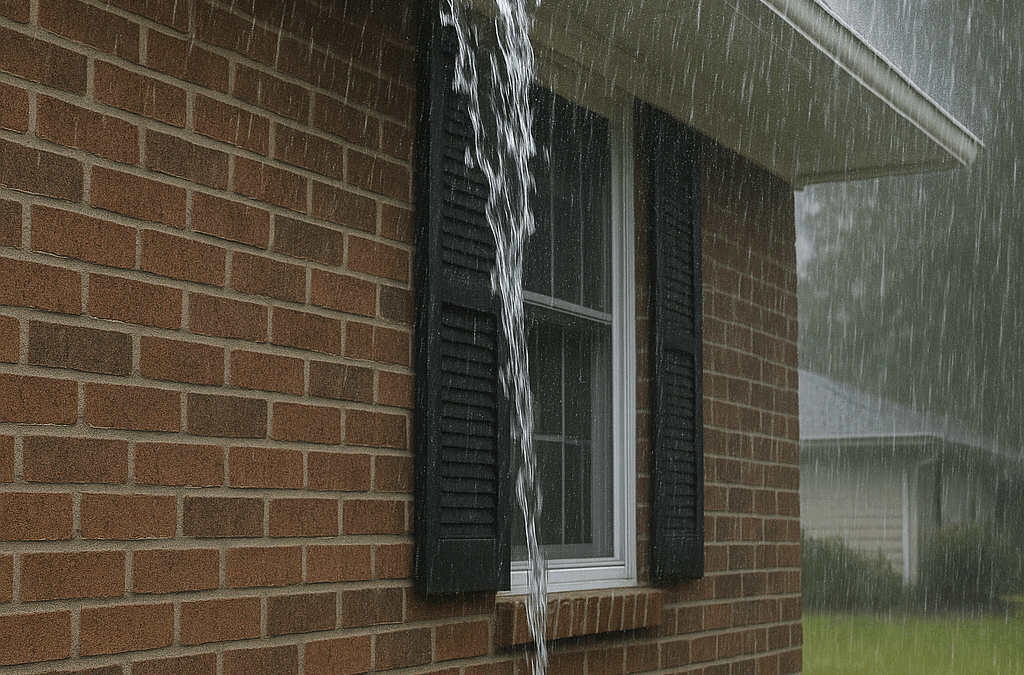
Spring in Cincinnati — the period from March through May — delivers the Ohio Valley’s most rainfall-intensive conditions. Warm, moisture-laden air masses from the Gulf of Mexico interact with cold frontal systems dropping from Canada across the Ohio Valley, creating the convective instability that generates Cincinnati’s most significant thunderstorm events. These spring systems can deposit one to two or more inches of rain within a single hour, creating roof surface runoff rates that require maximum gutter drainage capacity and unobstructed downspout flow to manage without overflow. Spring also represents the transition from winter’s debris and ice to the growing season’s biological activity, creating conditions where gutters emerge from winter potentially carrying debris loads, damaged sealants from thermal cycling, and ice-stressed components into the season of maximum rainfall demand.
Cincinnati’s summer rainfall arrives in the form of convective thunderstorms — intense but often shorter-duration events that can produce localized high rainfall rates. Summer also brings the heat and UV conditions that degrade gutter system materials. Cincinnati summer temperatures regularly reach the upper 80s and 90s Fahrenheit, and south and west-facing gutter runs absorb substantial solar heat loading that daily temperature cycling converts into thermal expansion and contraction stress. This thermal cycling hardens joint sealants and eventually produces cracking at corners, end caps, and outlet connections that creates pathways for water to reach fascia boards — damage that often accumulates invisibly through summer before autumn rainfall rates make the leakage volume apparent.
Cincinnati’s Winter Climate: Freeze-Thaw Cycling and Ice Events
Cincinnati’s winter climate is the defining seasonal challenge for gutter system integrity, and it distinguishes Cincinnati’s gutter maintenance needs from those of warmer southern cities in ways that homeowners benefit from understanding clearly.
The Ohio Valley’s geography creates regular winter patterns where Arctic air masses descend southward, temperatures drop below freezing, and then moderation occurs before the next cold intrusion — producing the repeated freeze-thaw cycling that characterizes Cincinnati winters. Temperature cycling across the freezing point — sometimes multiple times within a single week — creates specific mechanical stress on gutter systems. Sealants that have hardened from summer heat contract further in cold, becoming brittle, and the thermal cycling between above-freezing moderation and sub-freezing cold cracks these sealants progressively across the winter season. Gutter runs also expand and contract with temperature cycling, creating stress at hanger attachment points and joint connections.
Debris retained in gutters from autumn leaf fall creates the conditions that make freeze-thaw cycling most damaging. Water trapped by organic debris accumulations in gutter channels freezes during cold periods, expanding within the channel and exerting outward pressure on gutter walls and end caps. Each freeze-thaw cycle compounds stress on these components. By late winter, gutters that entered autumn with heavy debris loads and were not cleaned may show visible separation at joints, damaged end caps, or hangers pulling from fascia — physical evidence of cumulative freeze-thaw loading that clean gutters with proper water drainage would not experience.
Ice dam formation is a meaningful concern for Cincinnati homes during cold events. When attic heat escapes through the roof — due to insufficient insulation or inadequate ventilation — upper roof surface temperatures melt snow or ice that then runs toward the cold eave and refreezes. Debris-blocked gutters that retain water at the eave provide additional material for ice accumulation, and the resulting ice masses can force meltwater beneath shingles to reach the roof deck and interior spaces. Cincinnati’s variable winters — alternating between cold snaps and moderation periods — create the repeated melt-and-refreeze conditions that produce ice dam development in vulnerable roofline configurations.
Cincinnati also experiences ice storm events — freezing rain that deposits ice directly on gutter surfaces. The weight of ice in debris-laden gutters can exceed the design loading capacity of gutter fasteners, particularly where fascia boards have been softened by prior moisture damage, leading to gutter sagging, joint separation, or complete fascia attachment failure during or following ice events.
The Ohio Valley Tree Canopy in Cincinnati
Cincinnati’s residential tree canopy — featuring the mixed hardwood species characteristic of the Ohio Valley forest ecosystem — is one of the city’s most valued environmental assets and one of the most significant contributors to gutter maintenance demands in the metropolitan area. Mature oaks, maples, sycamores, sweetgums, beeches, hickories, and diverse ornamental species throughout Cincinnati’s established neighborhoods produce organic debris that loads gutters across multiple seasons.
Spring brings pollen, catkins, and seed material from Ohio Valley tree species. Maple seeds — from the silver, red, and sugar maples common throughout Cincinnati — create debris loading that begins earlier in the year than leaf fall, depositing organic material in gutters during spring’s peak rainfall period. Summer storms deposit leaves and small branches. Autumn’s leaf fall — concentrated in October and November in Cincinnati — represents the year’s maximum debris event, with the Ohio Valley’s mixed hardwood species depositing diverse leaf volumes that compact within gutter channels, retain moisture, and if left in place, freeze into debris masses during Cincinnati’s winter cold events.
Cincinnati’s sycamores, a species particularly abundant near the river valleys and creek corridors that define Cincinnati’s topography, produce large leaves and seed balls that can create blockages at downspout openings disproportionate to the total leaf volume deposited. Homeowners with large sycamores overhanging the roofline may find their gutters requiring more frequent attention than canopy volume alone would suggest, specifically due to the downspout-blocking tendency of sycamore seed balls.
Cincinnati’s Topography and Water Management
Cincinnati’s dramatic topographic relief — the city rises from the Ohio River bottoms through a series of hills, ridges, and valleys that give neighborhoods like Hyde Park, Mt. Lookout, Price Hill, and Mt. Adams their distinctive characters — creates varied drainage patterns that affect gutter system discharge management. Homes on hillside sites may have downspout discharge that flows directly down steep grades toward neighboring properties or concentrated at locations where discharge must be directed carefully to avoid erosion or property drainage conflicts. Homes in valley positions may receive surface water from uphill properties that combines with roof surface runoff to create drainage management challenges beyond what gutters alone address.
Understanding the specific topographic position of a Cincinnati home and the resulting drainage patterns is relevant to ensuring that gutter downspout discharge extensions are designed and positioned to direct water away from foundation perimeters and toward appropriate drainage routes given the site’s particular grade and topographic context.
Consequences of Gutter Maintenance Neglect in Cincinnati’s Environment
Foundation Moisture: Cincinnati’s soils, with their Ohio Valley clay content in many neighborhoods, create foundation moisture consequences when gutters overflow or discharge inadequately. Repeated soil saturation at the foundation perimeter from gutter overflow contributes to hydrostatic pressure on foundation walls, basement moisture intrusion, and the soil shrink-swell behavior that can produce foundation movement over time.
Fascia and Soffit Deterioration: The combination of Cincinnati’s frequent rainfall, high humidity slowing moisture evaporation from wood, and warm temperatures supporting biological activity creates conditions where fascia and soffit exposure to gutter overflow moisture produces rot relatively quickly compared to drier climates. Fascia that softens from chronic moisture exposure progressively loses its ability to hold gutter fasteners, contributing to the gutter sagging and detachment that Cincinnati homeowners frequently encounter in poorly maintained roofline systems.
Ice-Related Structural Damage: As described above, debris-blocked gutters in Cincinnati’s freeze-thaw winter climate experience mechanical stresses from ice expansion and loading that cause joint failures, end cap damage, and hanger detachment not experienced in gutters that are properly maintained and draining freely.
Conclusion
Cincinnati’s Ohio Valley climate — characterized by substantial annual precipitation with intense spring storm events, summer heat that stresses gutter materials, distinctive winter freeze-thaw cycling creating ice loading and ice dam risk, and the rich tree canopy of the Ohio Valley ecosystem producing multi-season debris loading — creates year-round gutter maintenance demands that homeowners benefit from understanding in specific and seasonal terms. Gutters Etcetera recognizes that Cincinnati-area homeowners benefit from knowing how each element of the city’s particular climate affects gutter system performance, what seasonal challenges arise from Cincinnati’s specific weather patterns, and what structural and moisture damage consequences develop for homes whose gutter systems are not maintained in alignment with the Ohio Valley’s demanding environmental conditions. This understanding provides the practical foundation for gutter maintenance decisions that protect every Cincinnati home throughout the full range of Ohio Valley seasonal weather.