
Cincinnati, Ohio homeowners invest in roofing, gutters, and exterior maintenance to protect their properties from the water damage that the Ohio Valley’s demanding four-season climate can inflict. Yet one of the roofline system’s most important water management components—drip edge—is frequently overlooked in conversations about roof and gutter protection. Installed at the roof edge where the shingle surface, fascia board, and gutter channel all converge, drip edge performs a precise directional function that prevents moisture from infiltrating structural wood components at the roofline. Gutters Etcetera believes that Cincinnati-area homeowners benefit from a complete understanding of drip edge—what it is, how it functions mechanically, why Cincinnati’s specific climate conditions make it essential, and what damage results when it is absent, damaged, or improperly installed.
What Gutter Drip Edge Is
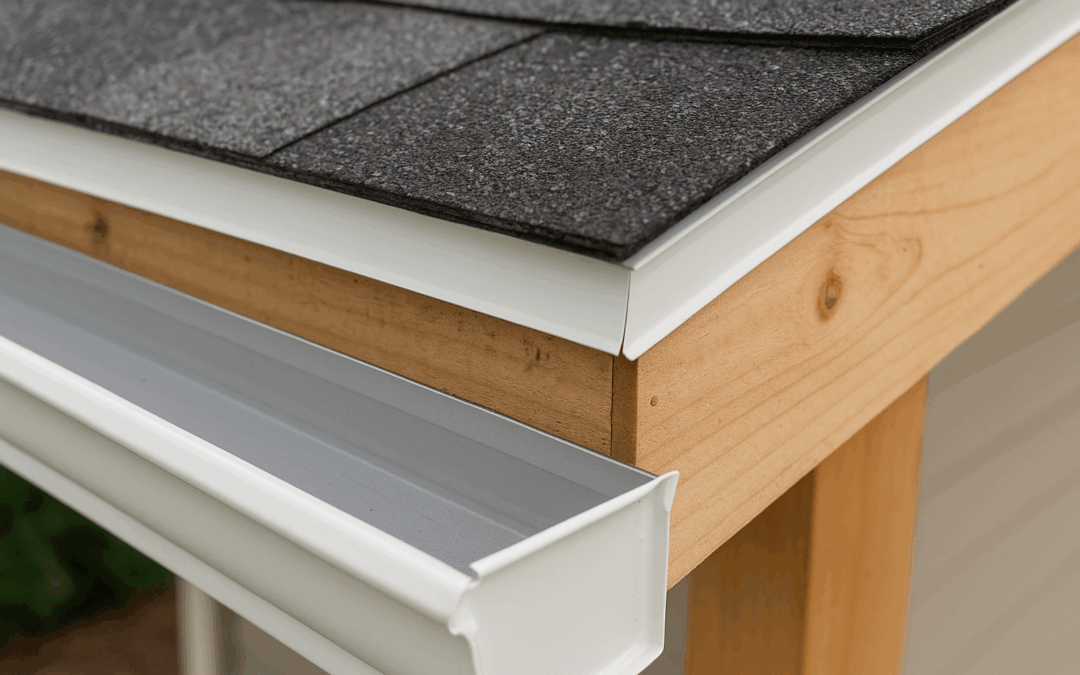
Drip edge is a formed metal flashing component installed at roof edges to intercept water flowing off the roof surface and direct it cleanly into the gutter below while preventing it from contacting or infiltrating the fascia board and roof deck edges. Manufactured from corrosion-resistant metals—most commonly aluminum for residential applications, with galvanized steel and copper also used—drip edge is formed into an angled profile that fits over the roof edge with one leg lying flat on the roof deck beneath roofing materials and the other leg extending downward over the fascia board exterior face.
The function embedded in the name is the core of what drip edge does: it creates a defined termination edge from which water drips freely into the gutter rather than migrating by capillary surface tension back along the underside of the roof decking toward the fascia. Capillary action—the tendency of water to travel along surfaces against gravity—is a real and significant phenomenon at roof edges where water transitions from the sloped roof surface to the vertical fascia. Without a properly positioned break in the surface continuity, water routinely follows the decking surface behind the fascia, reaching structural wood components that homeowners cannot easily see or inspect.
Multiple drip edge profile types exist for different applications. Type C (standard drip edge) provides a basic eave profile suitable for most residential applications. Type D (T-style) adds a wider horizontal flange providing additional coverage at the deck edge transition. Type L extends the vertical face for specific roofline geometries. Ohio building codes and the broader regional code framework increasingly require drip edge installation as a standard practice for both new roofing and re-roofing projects, reflecting the well-documented protective value this component provides.
How Drip Edge Functions Within the Roofline System
Drip edge’s effectiveness depends on precise installation sequence relative to other roof edge components. At the eave—the horizontal lower edge above the gutter—drip edge is installed directly on the bare roof deck before any other roofing materials. The roofing underlayment is then installed over the drip edge. Shingles are installed over the underlayment. This specific layering sequence ensures that any water reaching the deck surface below shingles—whether from wind-driven rain, ice dam water migration, or condensation—encounters the metal drip edge surface and is directed outward into the gutter rather than gaining access to the wood deck edge.
The drip edge’s downward extension over the fascia face positions the roof edge water departure point precisely above the gutter channel. This geometric relationship directly determines what proportion of roof surface runoff actually enters the gutter rather than falling behind it to the fascia surface. Gutters that appear properly positioned but lack drip edge to align the water departure point above them may capture significantly less runoff than gutters correctly integrated with drip edge—with the difference reaching the fascia repeatedly during every rainfall event.
At the rake—the sloped edge at gable ends—the installation order reverses, with drip edge installed over the underlayment and beneath the shingles. Rake drip edge provides a metal barrier at the shingle edge against wind-driven rain infiltration and protects the rake board below from direct water contact.
Cincinnati’s Climate and the Importance of Drip Edge
Cincinnati’s humid continental climate creates year-round moisture management demands at the roofline that make every component of the roof edge system consequential. Annual precipitation averages approximately 42 inches, distributed throughout four distinct seasons. Spring delivers the region’s most intense rainfall alongside active thunderstorm patterns. Summer brings additional storm activity. Autumn produces its own rainfall alongside the biological debris accumulation that affects gutter performance. Winter delivers Cincinnati’s most distinctive challenge: regular freeze-thaw cycling.
Cincinnati’s winter freeze-thaw cycling creates specific drip edge relevance through ice dam risk. Ice dams form when heat escaping from the warm attic space melts snow or ice on the upper roof surface, sending meltwater running down toward the cold eave—where it refreezes. This ice accumulation at the eave eventually forces backed-up meltwater beneath shingles at the roof edge. Properly installed drip edge, integrated with ice and water shield underlayment at the eave, provides a more complete barrier against this meltwater infiltration pathway. The metal drip edge surface resists the water migration that ice dam conditions create, offering additional protection during Cincinnati’s freeze events beyond what roofing materials alone provide.
Cincinnati’s Ohio River Valley setting creates persistent ambient humidity that significantly affects the consequences of any moisture infiltration at the roof edge. Wood fascia, roof decking edges, and structural framing that receives moisture through gaps that drip edge would seal retains this moisture in Cincinnati’s humid environment far longer than in drier climates. Extended wood moisture retention supports sustained biological activity—the fungal and bacterial deterioration that causes wood rot—meaning that roof edge moisture infiltration in Cincinnati produces more rapid and extensive structural damage than similar infiltration would cause in less humid regions.
The Ohio Valley’s mixed hardwood tree coverage creates heavy debris loading in gutters that makes overflow events common without consistent cleaning maintenance. When gutters overflow, they add concentrated moisture exposure to fascia and soffit that compounds the roof edge moisture that missing drip edge allows. The combination of overflow-driven moisture from above the gutter and roof-edge moisture from below the shingle overhang creates multiple simultaneous moisture infiltration pathways that accelerate roofline wood deterioration significantly.
Damage That Develops Without Proper Drip Edge
Fascia Deterioration and Gutter Failure: The most direct consequence of absent drip edge is chronic roof runoff contact with fascia boards. Cincinnati’s persistent Ohio Valley humidity slows drying between events, maintaining elevated fascia moisture that accelerates wood rot. Deteriorated fascia progressively loses fastener-holding capacity, causing gutters to sag, lose slope, and eventually separate from the roofline. What presents as gutter failure frequently originates in the fascia deterioration that missing drip edge initiated.
Roof Deck Edge Damage: Water that migrates behind the fascia contacts the roof decking edge directly. OSB and plywood decking absorbs this moisture at the edge, swelling and delaminating over time. Roof deck edge damage requires shingle removal, decking replacement, and reroofing to correct—a repair scope far exceeding drip edge installation cost.
Hidden Eave Space Moisture: Moisture infiltrating the eave space through roof edge gaps creates sustained humidity behind soffit panels and within the enclosed eave. This hidden moisture damages soffit materials from behind, contributes to attic humidity problems, and can establish mold or mildew in locations that require significant disassembly to inspect and remediate.
Reduced Gutter System Efficiency: Roof edge geometry that positions water departure behind rather than above the gutter channel results in a proportion of roof surface runoff consistently bypassing the gutter system. Over a roof’s service life in Cincinnati’s 42-inch annual rainfall environment, the cumulative water volume reaching the fascia through this bypass is substantial.
Shingle Edge Damage: Without drip edge backing the first shingle course at the eave, shingles overhang unsupported deck at the most wind-exposed roof edge. Cincinnati’s storm events create wind uplift conditions that disproportionately affect unsupported shingle edges, accelerating edge deterioration and creating vulnerability at the lowest and most accessible point of the roof surface.
Signs That May Indicate Drip Edge Problems
Cincinnati homeowners can observe several potential indicators of drip edge issues from ground level. Water staining on fascia surfaces concentrated specifically at the upper fascia edge—appearing even when gutters are intact—suggests roof edge water is contacting fascia rather than entering the gutter. Fascia paint deteriorating preferentially at the upper edge near the roofline indicates consistent water contact at this location. During heavy rainfall, water visible falling behind the gutter channel rather than from the downspout outlets suggests roof edge geometry that may lack proper drip edge integration.
Conclusion
Gutter drip edge is a small component that performs an outsized protective function in the complete roofline water management system of every Cincinnati, Ohio home. Gutters Etcetera recognizes that Cincinnati-area homeowners benefit from understanding what drip edge is, how it precisely integrates the roof surface, fascia board, and gutter channel into a continuous water management pathway, why Cincinnati’s Ohio Valley humidity, substantial annual precipitation, active storm seasons, and winter freeze-thaw cycling make correct drip edge installation especially important, and what structural damage develops when this critical roof edge component is absent or incorrectly installed. Appreciating drip edge as part of the complete roofline system—rather than as an incidental accessory—gives Cincinnati homeowners the knowledge to protect their properties more effectively from the wide range of water management challenges that Ohio Valley weather delivers throughout every season of the year.