
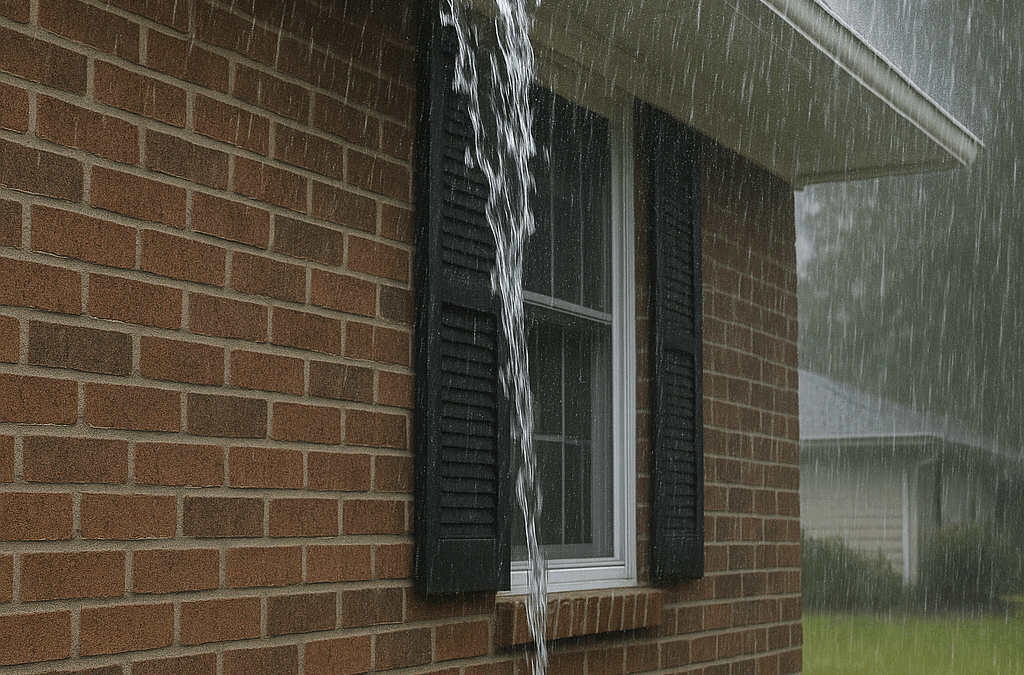
Cincinnati, Ohio homeowners invest in gutter systems to protect their homes from the water damage that accompanies the region’s substantial annual rainfall. What many property owners don’t fully appreciate is that gutter performance depends not just on system cleanliness and physical integrity, but on a precise geometric factor built into every properly installed gutter—slope. The angle at which gutters are pitched determines whether water flows reliably toward downspouts or sits stagnant in channels, creating conditions that undermine the gutter system’s entire protective purpose. Gutters Etcetera believes Cincinnati-area homeowners deserve a thorough understanding of gutter slope and pitch, why these factors are particularly consequential in Cincinnati’s specific climate and environment, what problems arise from inadequate slope, and how slope interacts with other gutter system components to determine overall drainage performance.
The Fundamentals of Gutter Slope
Gutter slope is the intentional downward angle built into each gutter run from its highest point to the downspout location at its lowest point. Gutters are not installed level—they’re deliberately tilted so that gravity provides consistent motivation for water to travel along the channel toward drainage outlets. This angle is calculated, not incidental, and achieving it correctly requires measurement, appropriate tools, and professional knowledge of installation standards.
The industry-standard specification for residential gutter slope is one-quarter inch of vertical drop per 10 linear feet of horizontal gutter run. This means that over a 40-foot gutter run, the downspout end should be positioned approximately one inch lower than the opposite end. On very long gutter runs—50, 60, or more feet—some installations use a center-high configuration with downspouts at each end, sloping from the midpoint outward toward both downspout locations, achieving proper drainage without creating a total elevation difference that becomes visually obvious or structurally problematic.
Understanding the difference between gutter slope and roof pitch helps homeowners appreciate the complete drainage system. Roof pitch describes the steepness of the roof surface itself—the angle at which water travels from ridge to eave. Gutter slope describes the angle of the gutter channel independent of roof steepness. A steep roof accelerates water delivery into the gutter, while gutter slope determines how quickly that water then travels through the channel to the downspout. Both factors influence how efficiently water moves from roof surface to final discharge, and professionals must coordinate both in system design.
Cincinnati’s Climate Creates Specific Slope-Related Risks
Cincinnati’s humid continental climate with approximately 42 inches of annual precipitation creates conditions where gutter drainage efficiency directly influences home protection outcomes. The city experiences spring and summer thunderstorm seasons delivering intense concentrated rainfall. The Ohio River Valley’s geographic setting can amplify storm intensity and precipitation, and Cincinnati has experienced significant flood events over its history—a reminder of how seriously water management must be taken in this region.
During intense Cincinnati rainfall events, gutters must drain rapidly toward downspouts or overflow becomes inevitable regardless of how clean or structurally sound the system is. Gutter slope is the factor that determines drainage speed. Inadequately sloped gutters—even if perfectly clean—may overflow during intense rainfall because water arriving at the gutter faster than it can reach downspouts has nowhere to go but over the edge. In Cincinnati’s climate with its periodic intense storms, this overflow risk makes proper slope a genuine safety factor for home protection.
Cincinnati experiences four distinct and pronounced seasons that create varying gutter demands. Spring brings the region’s heaviest rainfall combined with biological debris from flowering trees. Summer delivers thunderstorm activity with high-intensity events. Autumn produces significant leaf fall from the Ohio Valley’s substantial hardwood forests. Winter brings freeze-thaw cycling that physically affects gutter components and alignment. Correct slope must support effective drainage through all of these seasonal demands, not just during ideal conditions.
The freeze-thaw cycling characteristic of Cincinnati winters deserves specific attention in the context of gutter slope. Water that pools in gutters due to insufficient slope becomes ice during freezes. Ice formation in gutter channels exerts outward pressure on gutter walls and downward pressure on gutter profiles, progressively deforming the cross-section and stressing fasteners. Repeated freeze-thaw cycles cause cumulative deformation that worsens both drainage capacity and slope consistency. Gutters that drain completely due to correct slope are far less vulnerable to freeze-related deformation than those that retain standing water.
Ohio Valley humidity means moisture that does accumulate in gutters evaporates slowly. Standing water in Cincinnati gutters persists substantially longer between rainfall events than it would in drier climates, creating prolonged exposure to the biological and chemical deterioration processes that standing water promotes. The combination of frequent rainfall, slow evaporation, and year-round biological activity makes Cincinnati a particularly demanding environment for gutter systems and underscores the importance of drainage efficiency.
Specific Damage Resulting from Slope Problems
Gutter Corrosion and Joint Failure: Standing water in aluminum gutters maintains constant moisture contact with metal surfaces and sealant compounds. While aluminum itself resists rust, sealants at joints, corners, and end caps degrade significantly faster under continuous water exposure than under normal drain-and-dry cycling. As sealants fail, joints develop leaks that allow water to escape behind gutters and contact fascia boards. Accelerated corrosion at sealant failure points progressively worsens leakage.
Mosquito Breeding and Public Health Concerns: Standing water in residential gutters is a well-documented mosquito breeding source. The warm Ohio Valley summers provide ideal temperature conditions for rapid mosquito development, and even small amounts of standing water support substantial breeding populations. Cincinnati area public health guidance consistently lists standing water elimination—including gutter standing water—as a primary mosquito control strategy. Proper slope, ensuring complete gutter drainage, directly addresses this public health dimension of gutter maintenance.
Hanger and Fastener Progressive Failure: Cincinnati’s freeze-thaw cycling combined with the weight of standing water and debris creates particularly damaging conditions for gutter fasteners. Each freeze cycle in a water-filled gutter section subjects fasteners to outward expansion forces. Each thaw and rain cycle reloads hangers with the combined weight of standing water and debris. This repeated loading and freeze stress progressively loosens fasteners from fascia, creating low spots, sagging, and ultimately structural separation of gutters from the roofline.
Roof Edge and Soffit Damage: Water overflowing gutters due to poor slope runs down the exterior of the gutter and contacts the fascia and soffit above and behind the gutter. Cincinnati’s relatively high annual rainfall means these overflow events occur frequently in systems with slope problems. The chronic moisture exposure causes paint failure, wood rot in fascia and soffit framing, and eventual structural compromise that requires significant repair investment.
Basement and Foundation Issues: Cincinnati’s topography, with many homes on hillsides and valleys, means foundation water management is a critical concern. Water overflowing gutters due to slope problems concentrates at the foundation perimeter in large volumes rather than being distributed through downspouts to appropriate discharge points. In Cincinnati’s clay-bearing soils, this concentrated foundation moisture creates hydrostatic pressure, clay expansion, and in severe cases, structural foundation movement.
How Installation Errors Create Slope Problems
Many slope problems originate at installation. Installers who rely on visual judgment rather than measurement tools, who skip the step of establishing proper reference lines before fastening gutters, or who lack experience with the quarter-inch-per-10-feet standard frequently produce installations with inconsistent or inadequate slope. These installation errors may not produce immediately obvious symptoms but create ongoing drainage problems that worsen over time as additional factors like debris accumulation and fastener loosening compound the initial deficiency.
Hanger placement decisions during installation also significantly affect long-term slope maintenance. Hangers placed too far apart allow gutter profiles to sag between attachment points, creating low spots that accumulate water even when the overall installed slope was initially correct. Fasteners driven into deteriorated or undersized fascia boards lack the holding strength to maintain gutter position over time. Recognizing these installation quality factors helps homeowners evaluate the work quality of prospective contractors.
Signs Cincinnati Homeowners Should Watch For
Water staining on siding or exterior walls below gutter locations, visible sagging of gutter sections away from the roofline level, and water sounds continuing long after rain stops all indicate potential slope problems. Standing water visible in gutters after rainfall ends—particularly in mid-run locations away from downspouts—directly demonstrates inadequate slope. Increased mosquito activity near rooflines and gutter overflow visible during rainfall confirm drainage system performance problems requiring professional evaluation.
Conclusion
Gutter slope and pitch represent the hidden engineering factor that determines whether Cincinnati, Ohio gutter systems fulfill their water protection purpose or merely appear to do so while allowing progressive damage to accumulate. Gutters Etcetera understands that Cincinnati-area homeowners benefit from comprehending why this precise installation detail matters so greatly, how Cincinnati’s Ohio Valley climate with its significant rainfall, freeze-thaw cycling, and persistent humidity creates specific slope-related risks, and how to recognize the symptoms that suggest slope problems are developing before they lead to expensive structural damage. Proper slope, established through professional installation and maintained through periodic inspection and adjustment, is the foundational performance requirement that determines whether a gutter system truly protects a Cincinnati home throughout decades of demanding regional weather.