
Cincinnati, Ohio homeowners with mature trees surrounding their properties understand the persistent challenge that gutter maintenance presents throughout the year. The Ohio Valley’s diverse and abundant tree populations deliver successive waves of debris—spring blossoms and seed pods, summer organic material, heavy autumn leaf falls, and winter organic accumulation—that fill gutters and compromise drainage systems. Gutter guards have gained significant attention as potential solutions to this ongoing maintenance challenge. Gutters Etcetera believes that Cincinnati-area homeowners deserve comprehensive, accurate, and unbiased information about gutter guard types, genuine performance expectations, specific limitations in Cincinnati’s environment, and practical guidance helping make informed decisions for their specific properties and circumstances.
Defining Gutter Guards and Their Purpose
Gutter guards represent a broad, diverse category of products sharing the fundamental objective of allowing rainwater to enter and flow through gutter channels while preventing or significantly reducing debris accumulation inside those channels. The term covers products ranging from simple DIY plastic screens to elaborate professionally installed systems using advanced materials and engineering principles. This enormous range in design, quality, materials, and cost reflects genuine differences in performance capabilities rather than simply marketing variation.
All gutter guard systems attempt to solve the same basic problem through different mechanical approaches. Some create fine filtration barriers. Others leverage physical principles like water surface tension. Some displace debris by filling the gutter channel. Understanding these fundamental differences in operating principle provides the foundation for evaluating which approaches suit specific property conditions and performance expectations. No single approach works equally well in all environments or against all debris types—a critical reality that product marketing often obscures.
Comprehensive Overview of Gutter Guard Types
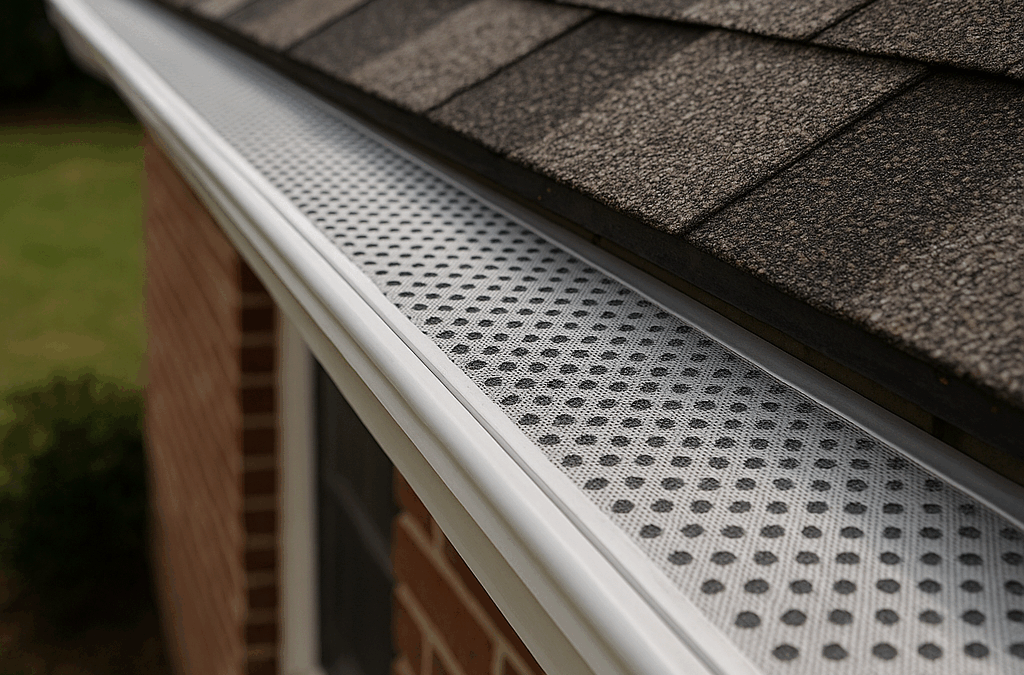
Micro-Mesh Gutter Guards consistently earn the strongest performance ratings from independent testing and professional contractor experience. These systems install aluminum or stainless steel frames over gutter openings, spanning the gutter width, with extremely fine mesh stretched across the frame surface. The mesh openings—often measured in microns rather than millimeters—permit water to pass through via surface tension while blocking virtually all debris including the fine material that defeats standard screen products. Premium systems use surgical-grade stainless steel mesh that resists corrosion and clogging better than aluminum mesh alternatives. Well-designed micro-mesh products angle the mesh surface so debris can slide off rather than accumulating. These systems require professional installation for optimal performance and represent higher initial investments, but deliver the most consistent real-world results in diverse debris environments like Cincinnati’s.
Standard Screen and Mesh Products use larger openings than micro-mesh systems, blocking leaves and substantial debris while passing water. Product quality within this category varies substantially. Basic stamped plastic or thin aluminum screens with relatively large, irregular openings represent the low end—affordable but prone to warping, cracking, and allowing fine debris passage. Better screen products use more durable materials, more uniform opening patterns, and more robust frame construction. Standard screens perform adequately for blocking large leaf debris but allow fine material including seed pods, pine needles, and organic fines into gutters. For properties with primarily large deciduous trees and minimal fine debris, they offer reasonable value.
Reverse Curve Guards function through water adhesion. These products feature curved profiles over which water flows, clinging through surface tension to the curve and entering the gutter through an opening positioned below the curve’s apex while debris continues past the opening and falls to the ground. These systems often feature durable construction and professional appearance, typically requiring professional installation for appropriate positioning. Their effectiveness varies with roof pitch, installation angle, and rainfall intensity. Cincinnati’s periodic heavy rainfall events, particularly during spring thunderstorm season, can produce water flow rates that overcome surface tension, allowing water to overshoot gutters—a meaningful limitation given the region’s precipitation patterns.
Foam Insert Systems place porous foam material shaped to fill the gutter channel, allowing water to permeate through the foam while debris theoretically sits atop. These products appeal through their simplicity and low cost. However, Cincinnati’s environment highlights significant practical limitations. The region’s humid conditions and moderate temperatures support active biological growth—seeds readily germinate in foam material, with roots progressively destroying foam structure and creating permanent blockages. Fine organic debris fills foam pores over time. Foam material degrades from UV exposure and freeze-thaw cycling, requiring periodic replacement. Many homeowners find cleaning debris-laden foam inserts more challenging than cleaning open gutters.
Brush Insert Systems place cylindrical brush assemblies in gutter channels with bristles filling the gutter cross-section. Water flows through bristles while debris collects on top. Cincinnati’s leaf-fall conditions create specific problems—the dense autumn debris loads in Ohio Valley neighborhoods overwhelm brush systems, with leaves and debris accumulating faster than they can desiccate and blow away. Cleaning brush systems requires removing long sections, cleaning bristles, and reinstalling, a process that can be as labor-intensive as traditional gutter cleaning.
Solid Cover Systems cover the gutter entirely with a solid surface featuring a narrow slot at the front edge for water entry, using surface tension to direct water off the roof surface around the cover and through the slot while debris sheds off the solid surface to the ground. Better-engineered solid cover products handle typical precipitation well. Like reverse curve systems, extremely intense rainfall can overcome surface tension mechanisms, particularly relevant during Cincinnati’s heavier thunderstorm events. These systems generally provide excellent large debris protection and pest exclusion.
Cincinnati’s Unique Environment and Gutter Guard Challenges
Cincinnati’s geographic position in the Ohio Valley creates distinctive conditions affecting gutter maintenance and guard performance. The city’s substantial mixed hardwood forests deliver significant autumn leaf volumes. Oak trees, extremely prevalent throughout Cincinnati’s neighborhoods, drop large volumes of leaves combined with acorns that create challenging gutter debris loads. Maple trees throughout the region release abundant samaras—winged seed pods—in late spring that work their way through many guard types. Sycamore trees common along Cincinnati’s waterways and neighborhoods release large leaves and distinctive seed balls. Various pine plantings produce needles challenging standard screen products. Sweet gum trees produce spiky seed balls. This diverse debris mix means guards designed for single-debris-type performance may prove inadequate for Cincinnati’s varied tree canopy.
Cincinnati’s four distinct seasons create year-round gutter maintenance demands. Spring brings pollen loads, blossoms, and seed debris. Summer delivers organic fines and biological growth. Autumn produces the heaviest debris loads from extensive deciduous tree coverage. Winter brings freeze-thaw cycles that affect guard materials and can cause ice-related issues at roof edges. This year-round debris challenge means gutter guards must perform across diverse seasonal conditions rather than just during peak leaf fall.
The region’s humidity prevents organic debris from quickly drying and dispersing from guard surfaces. Moist debris decomposes into fine organic material that gradually clogs micro-mesh openings and requires periodic cleaning even on premium systems. This real-world condition significantly affects performance compared to manufacturer testing under ideal dry conditions.
Genuine Benefits and Honest Limitations
Quality gutter guard systems provide meaningful genuine benefits when properly selected and installed. Maintenance frequency reduction represents the primary tangible benefit—homeowners with quality micro-mesh systems over heavy debris producers often reduce cleaning from three or four times annually to once, representing real savings in time, cost, and physical risk from ladder work. Prevention of complete gutter blockage during storms protects fascia, foundations, and landscapes from sudden overflow events even when some debris accumulation does occur. Guards reduce pest attraction by limiting standing water and debris that support insect breeding and nesting.
However, realistic expectations require acknowledging genuine limitations. No system currently available eliminates gutter maintenance requirements under Cincinnati’s conditions. Fine organic material, pollen, and accumulated debris eventually require attention on any system. Marketing claims frequently overstate performance—independent testing consistently reveals real-world results falling short of manufacturer representations. Homeowners expecting permanent maintenance elimination will be disappointed.
Cost-effectiveness requires property-specific analysis. Properties with minimal nearby trees may find premium guard costs difficult to justify. Properties with extensive diverse tree coverage may find quality systems provide excellent long-term value through meaningful maintenance reduction.
Practical Selection Guidance
Matching guard type to specific property debris characteristics represents the most important selection consideration. Properties with large deciduous tree coverage and minimal fine debris may find quality standard screen systems adequate. Properties with pine trees, sweetgum, or diverse fine debris producers require micro-mesh systems to effectively reduce maintenance. Properties with primarily open surroundings and minimal tree coverage may find any guard provides limited benefit relative to cost.
Researching specific products through independent consumer reviews and contractor input provides more reliable performance expectations than manufacturer marketing materials. Professional installation of quality products consistently outperforms DIY installation of identical products by ensuring proper positioning, secure attachment, and correct integration with existing gutter systems.
Conclusion
Gutter guards offer Cincinnati, Ohio homeowners potentially significant maintenance reduction benefits but require careful product selection, realistic performance expectations, and honest evaluation of specific property conditions for successful implementation. Gutters Etcetera recognizes that Cincinnati-area homeowners benefit from understanding the substantial differences between micro-mesh, screen, reverse curve, foam, brush, and solid cover guard types, appreciating how Cincinnati’s diverse Ohio Valley tree canopy, humid climate, and varied seasonal conditions affect guard performance, and approaching purchasing decisions with well-informed realistic expectations. When appropriately matched to specific property conditions and properly installed, quality gutter guards can provide lasting value reducing the maintenance burden that Cincinnati’s abundant tree coverage creates for homeowners throughout the year.