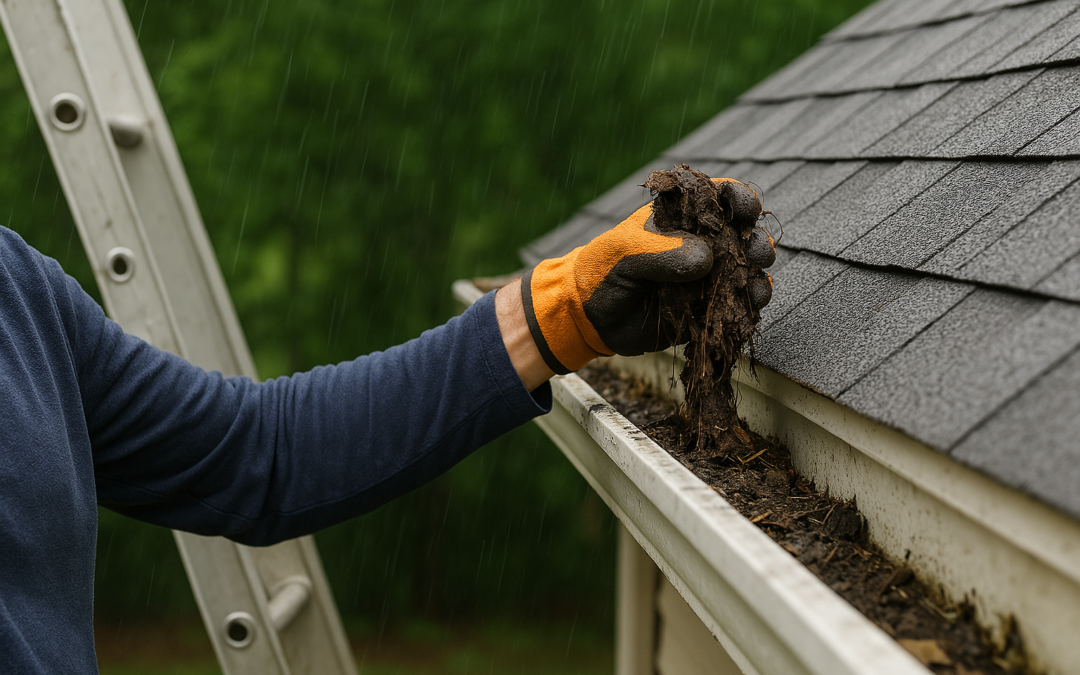
Why Soil-Like Debris Forms in Cincinnati-to-Dayton Gutters
Gutter buildup does not always look like a pile of leaves. Across the Cincinnati-to-Dayton corridor, homeowners may see a dark layer that resembles soil, silt, or compost. It can collect below roof valleys, around downspout openings, or beneath newer fall debris. The...
Why Soil-Like Debris Forms in Cincinnati-to-Dayton Gutters
Gutter buildup does not always look like a pile of leaves. Across the Cincinnati-to-Dayton corridor, homeowners may see a dark layer that resembles soil, silt, or compost. It can collect below roof valleys, around downspout openings, or beneath newer fall debris. The...
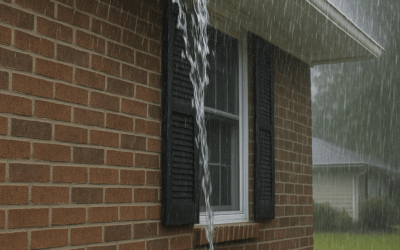
Why Downspout Puddles Form on Cincinnati-to-Dayton Properties
Fall rain can leave a round pool below one downspout while another outlet on the same house has no standing water. The difference may begin at the gutter, but it can also arise after runoff reaches the ground. Soil moisture, slope, paving, landscaping, and storm...

First Frost and Gutters: A Cincinnati-to-Dayton Homeowner’s Guide
The Ohio Valley’s first frost can highlight small differences around a roofline. One gutter run may be dusted white from end to end, another may thaw as soon as sunlight arrives, and a shaded corner may hold a thicker patch well into the morning. Frost does not...
Is That Moisture Condensation or a Gutter Leak? A Cincinnati-to-Dayton Guide
Fall mornings across southwest Ohio often begin with wet grass, damp vehicles, and beads of moisture on exposed metal. Gutters can collect the same condensation. A separate moisture pattern may appear only during rain, when runoff reaches a joint, crosses the gutter...