In Cincinnati, Ohio, wood soffit is a roofline component that quietly performs important protective and ventilation functions while facing continuous weathering stress from the region’s demanding four-season climate. When soffit deteriorates—as it inevitably does without proper maintenance and moisture management—the consequences extend well beyond the visible roofline surface, affecting attic ventilation, pest exclusion, structural integrity, and the gutter system’s ability to perform effectively. Gutters Etcetera believes that Cincinnati-area homeowners benefit from a clear and detailed understanding of wood soffit, the deterioration mechanisms Cincinnati’s climate creates, the warning signs that indicate repair or replacement is needed, and the practical knowledge that supports informed home maintenance decisions.
What Wood Soffit Is
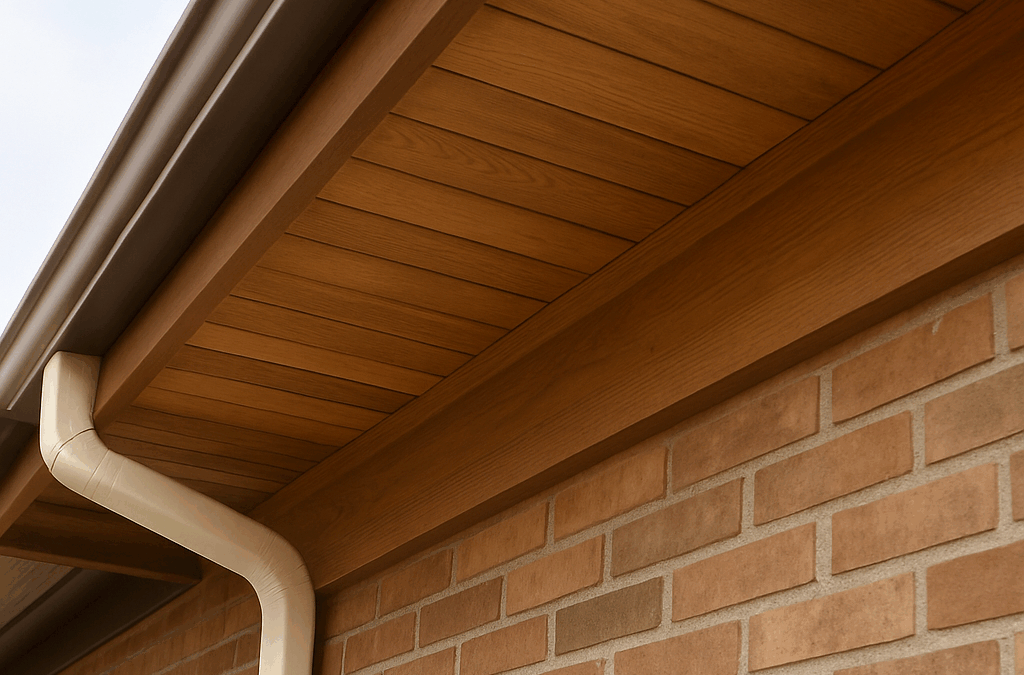
Soffit describes the material installed on the underside of the roof overhang—the horizontal surface visible beneath the eaves between the home’s exterior wall and the fascia board at the outer roofline edge. Wood soffit, constructed from boards, plywood panels, or engineered wood products, encloses the eave space that would otherwise expose roof rafters and structural framing to outdoor conditions. This enclosure provides a finished visual appearance to the roofline underside while serving functional purposes essential to roof system health.
Attic ventilation is wood soffit’s most critical functional contribution. Vented soffit panels admit outside air into the attic from below, providing the intake airflow that attic ventilation systems require to function. This ventilation performs multiple protective functions simultaneously: it removes summer heat that would otherwise accumulate in the attic to extreme temperatures, accelerating shingle deterioration and increasing cooling loads; it removes moisture-laden air during cooler months, preventing condensation that damages roof decking and framing; and it contributes to the temperature equalization across the roof surface that reduces ice dam formation risk during Cincinnati’s winter freeze periods.
The pest exclusion function of wood soffit is equally important in Cincinnati’s urban and suburban environment. Open eave spaces without soffit covering provide accessible, sheltered entry points for birds, squirrels, bats, raccoons, wasps, and hornets. Cincinnati’s diverse wildlife population actively exploits unprotected eave openings, establishing nests and colonies that contaminate attic insulation, damage electrical wiring, and create structural problems requiring professional remediation. Maintaining soffit integrity is fundamental to excluding this wildlife from the protected envelope of the home.
Cincinnati’s Climate and Wood Soffit Deterioration
Cincinnati’s humid continental climate creates year-round weathering conditions that challenge exterior wood components. Approximately 42 inches of annual precipitation, four distinct and pronounced seasons, persistent Ohio River Valley humidity, and repeated freeze-thaw cycling during winter months combine to create deterioration conditions that demand consistent attention to wood soffit maintenance.
The freeze-thaw cycling that characterizes Cincinnati winters is particularly damaging to painted wood soffit. As temperatures cycle above and below freezing—sometimes multiple times within a single week during Cincinnati’s variable winter weather—wood soffit expands and contracts repeatedly. Paint films applied to wood surfaces crack under this repeated dimensional cycling, creating moisture entry points that allow water to penetrate the wood during thaw and rain periods. Moisture that enters wood through paint cracks freezes during subsequent cold periods, expanding cracks mechanically and exposing progressively larger wood surface areas to direct moisture contact with each cycle.
Spring in Cincinnati delivers the year’s most challenging combination of conditions for wood soffit. Substantial and frequent rainfall, moderate temperatures ideal for biological activity, high humidity from the Ohio Valley environment, and organic debris accumulation in gutters from the region’s mixed hardwood forests all combine to create peak moisture exposure conditions. Gutters blocked by spring debris overflow repeatedly, sending concentrated moisture over fascia and onto soffit surfaces during the season when moisture loading is already at its annual maximum.
The Ohio River Valley’s persistent humidity means wood soffit that gets wet during rainfall events dries slowly between events. Wood maintaining elevated moisture content for extended periods after each rain provides sustained conditions for the fungal activity that causes wood rot. In drier climates, wood might dry between rain events quickly enough to prevent continuous biological activity; Cincinnati’s Ohio Valley humidity extends wet periods and supports more sustained deterioration.
Causes of Wood Soffit Deterioration in Cincinnati
Chronic Gutter Overflow: The most common cause of accelerated soffit deterioration in Cincinnati is gutter overflow from debris blockage. Cincinnati’s mixed hardwood forests produce diverse debris—oak leaves and acorns, maple samaras, sycamore seed balls, and various ornamental tree debris—across multiple seasons. Gutters that accumulate this debris overflow during rainfall, directing concentrated water against fascia and soffit repeatedly. This overflow-driven moisture exposure creates far greater soffit deterioration than natural weather conditions alone.
Attic Ventilation Failure: When attic ventilation is insufficient—due to blocked soffit vents, inadequate vent area, or poor vent placement—moisture generated within the home accumulates in the attic. This moisture condenses on cold roof framing and decking during winter months and can migrate to soffit panels from the attic side, causing deterioration that appears unconnected to exterior conditions but is actually driven by internal moisture management failure.
UV and Paint Degradation: Cincinnati’s summer sunshine accumulation degrades exterior paint protecting wood soffit. Paint chalking, fading, and film failure expose wood to direct moisture contact, accelerating deterioration. Soffit, positioned beneath the roof overhang and less immediately visible than other exterior surfaces, is frequently neglected in exterior painting cycles—allowing protective paint to fail without replacement.
Physical and Impact Damage: Tree limb contact during wind events, hail impacts, and ladder damage during roofline maintenance work create cracks and openings in soffit panels. Even small physical damage creates immediate pest access and moisture infiltration points that worsen progressively without repair.
Warning Signs Specific to Cincinnati Homes
Cincinnati homeowners should watch for soft or spongy soffit texture when panels are pressed, indicating active rot compromising structural integrity. Visible paint failure—bubbling, peeling, or significant cracking—signals moisture reaching wood beneath. Dark water staining, streaking, or biological growth on soffit surfaces indicates sustained moisture exposure. Gaps, cracks, or holes in soffit panels—whether from structural failure, pest activity, or physical damage—create immediate pest access and moisture infiltration. Wildlife activity at the eave level, including birds or bats entering the eave area or wasps building nests at soffit edges, suggests integrity failures providing access.
Interior indicators including unusual attic humidity, visible condensation on attic structural components during winter, or pest evidence in the attic space may all connect to soffit integrity problems affecting ventilation or pest exclusion.
Why Addressing Root Causes Matters
Repairing or replacing wood soffit without resolving the moisture sources causing deterioration produces temporary results followed by recurring problems. In Cincinnati homes, these moisture sources typically include gutter overflow from debris accumulation, failed gutter sealants creating moisture pathways at joints, deteriorated fascia boards transferring moisture to adjacent soffit, and inadequate attic ventilation contributing interior moisture to the eave space from above. Identifying and addressing these upstream causes as part of soffit remediation delivers lasting improvement rather than cosmetic repair that deteriorates rapidly.
Conclusion
Wood soffit repair and replacement are meaningful homeowner concerns in Cincinnati, Ohio, where the combination of Ohio Valley humidity, substantial annual rainfall, pronounced freeze-thaw cycling, and four-season weathering stress creates persistent deterioration pressure on roofline wood components. Gutters Etcetera understands that Cincinnati-area homeowners benefit from recognizing the ventilation and pest exclusion functions wood soffit performs, understanding the specific deterioration mechanisms Cincinnati’s climate creates, and knowing the warning signs that indicate soffit condition warrants evaluation. Addressing soffit problems comprehensively—including the gutter performance and moisture management factors driving deterioration—protects the complete roofline system and contributes to the long-term structural health of every Cincinnati home.