
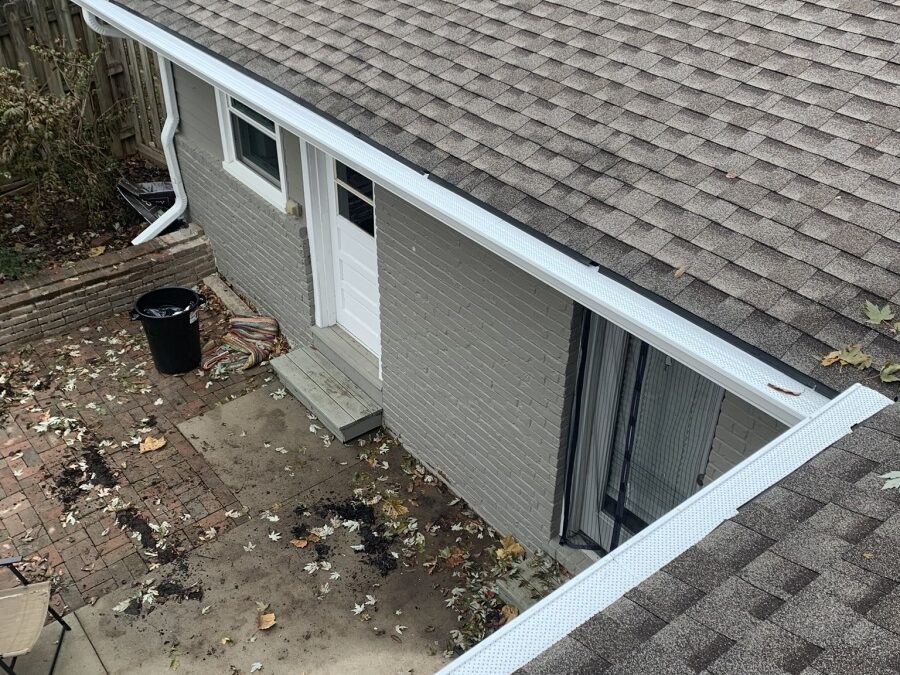
Cincinnati, Ohio homeowners face important decisions when installing or replacing gutter systems on their properties. Among the most consequential choices is selecting between traditional sectional gutters assembled from multiple pieces and modern seamless gutter systems custom-fabricated as continuous units. This decision significantly impacts long-term system performance, maintenance requirements, and overall effectiveness at protecting homes from water damage. Gutters Etcetera regularly provides Cincinnati-area property owners with detailed information about seamless gutter systems, explaining the technology, manufacturing process, performance advantages, and considerations that distinguish this approach from conventional sectional installations. Thorough understanding of seamless gutters—how they’re produced, what benefits they deliver, potential limitations, and maintenance needs—empowers homeowners to make well-informed decisions about their property’s critical water management infrastructure.
What Seamless Gutters Are
Seamless gutters, also called continuous gutters, represent a significant departure from traditional gutter construction methodology. Conventional sectional gutters come as factory-manufactured pieces in standardized pre-cut lengths—most commonly 10-foot sections—which are transported to installation sites and assembled by connecting multiple pieces together using various joining hardware, brackets, and waterproof sealants. Each connection creates both a structural joint and a potential vulnerability where leaks may eventually develop as materials age and sealants deteriorate.
Seamless gutters eliminate this multi-piece assembly approach. Instead of joining pre-cut sections, seamless systems are custom-fabricated on-site as single continuous pieces for each straight roofline run. This is accomplished using specialized portable manufacturing equipment called gutter machines, seamless gutter machines, or roll-forming machines. These devices accept coiled flat sheet metal—predominantly aluminum, though steel and copper are also used—and progressively form it through a carefully designed series of positioned rollers that bend, fold, and shape the flat material into the desired three-dimensional gutter profile.
As raw metal stock continuously feeds through the forming machine, finished gutter emerges in whatever length the specific installation requires. Length is limited only by material coil capacity and practical handling constraints rather than by factory-determined section lengths. Single continuous seamless gutter pieces of 100 feet or longer are entirely practical, allowing most residential roofline sections to be served by individual continuous pieces without intermediate joints.
The most popular residential seamless gutter profile is the K-style or ogee design, featuring a decorative face that aesthetically resembles crown molding while providing functional water-carrying efficiency. This profile typically comes in 5-inch and 6-inch widths, with the larger 6-inch size becoming increasingly common due to enhanced water-carrying capacity beneficial during intense rainfall events. Half-round profiles, featuring simple semicircular cross-sections, represent another option particularly suited to historic properties or homes requiring specific architectural authenticity.
Aluminum overwhelmingly dominates seamless gutter material selection due to multiple favorable characteristics. It naturally resists corrosion without requiring protective coatings or treatments, maintains manageable weight that doesn’t excessively stress fascia board mounting surfaces, accepts paint well while also being available with durable factory-applied color finishes in numerous options, and provides excellent strength-to-cost performance ratios. Standard residential aluminum gutter material thickness ranges from .027 inches to .032 inches, with heavier gauge material offering greater durability, rigidity, and dent resistance at proportionally higher cost. Copper seamless gutters provide exceptional longevity measured in decades and develop distinctive attractive patina finishes but command premium pricing. Steel seamless gutters offer maximum structural strength but require protective coatings to prevent rust and corrosion.
Fundamental Differences Between Seamless and Sectional Gutters
The core distinction between these two gutter system types centers on seam quantity and assembly approach. Sectional gutter systems consist of numerous factory-manufactured pieces that must be connected together during on-site installation. A typical residential property with 150 linear feet of roofline perimeter might require fifteen or more separate 10-foot gutter sections plus additional specialized pieces including inside corners, outside corners, end caps, downspout outlets, and various connection brackets or slip joints. Each connection point must be mechanically joined and sealed with caulk, gaskets, or other sealant materials to create watertight joints preventing leaks. Over years of service exposure to weather, these numerous seams become potential failure points as sealants inevitably age, deteriorate from ultraviolet radiation exposure and temperature cycling, and eventually lose effectiveness.
Seamless construction dramatically reduces joint count. That same 150-foot roofline might be served by perhaps four or five continuous gutter sections with seams existing only at corner transitions and downspout outlet locations where joints remain functionally necessary for system configuration. This represents a reduction from potentially dozens of leak-vulnerable connection points to just a small handful, fundamentally transforming the system’s long-term reliability characteristics.
Installation processes differ substantially between these approaches. Sectional gutters are readily available at retail home improvement stores and can be installed by homeowners possessing basic construction skills, common tools, and willingness to work on ladders. This do-it-yourself accessibility appeals to cost-conscious property owners prepared to invest their own labor rather than paying for professional installation services. Seamless gutters require professional installation utilizing specialized fabrication equipment, precise measurement and calculation capabilities, and experienced installation expertise. While eliminating DIY options, this professional requirement ensures proper slope calculation, secure mounting with appropriately spaced hangers or brackets, optimal downspout positioning, and quality workmanship.
Aesthetic differences distinctly favor seamless construction. Without visible seams, connectors, joint hardware, and multiple connection points interrupting rooflines, seamless gutters create clean, continuous, flowing visual lines that enhance rather than compromise architectural appearance. The custom fabrication to exact building-specific dimensions ensures perfect fit without the slight misalignments, dimensional compromises, gaps, or awkward overlaps that sometimes occur when adapting standardized pre-cut sectional lengths to actual building measurements.
Major Advantages Seamless Gutters Provide
Substantially reduced leak potential represents the most significant and compelling functional advantage seamless gutters offer over sectional alternatives. Extensive industry experience, installer observations, and homeowner reports consistently confirm that the overwhelming majority of gutter system leaks develop at seams where separate sections connect together. Caulks, sealants, and gasket materials used at these joints inevitably degrade and deteriorate through continuous cumulative exposure to ultraviolet solar radiation, repeated temperature cycling causing expansion and contraction, direct moisture contact, and simple material aging over time. As sealants progressively fail and gaps develop at connections, water escapes from the gutter system, potentially causing fascia board rot, foundation damage, landscape soil erosion, and basement or crawlspace moisture infiltration problems. By eliminating the vast majority of seams through continuous one-piece construction, seamless gutters remove most leak vulnerability points from the system entirely.
Dramatically reduced maintenance requirements flow directly and logically from this enhanced leak resistance. Sectional gutter systems frequently require periodic joint inspection and re-sealing as original caulking compounds fail, crack, shrink, or separate, allowing leaks to develop. This ongoing maintenance involves both material costs for replacement sealants and labor investment—whether homeowner time and effort or professional service fees. Seamless gutters largely eliminate this maintenance burden, requiring primarily routine seasonal debris removal and occasional inspection rather than regular joint maintenance, monitoring, and re-sealing activities.
Enhanced structural integrity and strength characterize seamless gutter installations. Continuous single-piece construction distributes service loads uniformly and evenly across entire gutter lengths, supported by appropriately spaced mounting brackets, hidden hangers, or other fastening systems. Sectional systems concentrate structural stress and loading forces at connection points where the accumulated weight of collected water and debris can cause progressive joint separation, sagging, pulling away from mounting surfaces, or outright structural failure. Seamless gutters handle these routine service loads more effectively and reliably, substantially reducing risks of sagging, separation, or failure.
Precise custom fitting optimizes system performance for each specific property’s unique characteristics. Because seamless gutters are fabricated on-site to exact measurements for each individual installation, they fit building dimensions perfectly without compromise or adaptation. Downspout outlet locations can be positioned optimally based on property drainage patterns, landscape features, existing underground drainage, and water management needs rather than being constrained by sectional gutter dimensional limitations or pre-determined connection point locations. This complete customization maximizes water management effectiveness for each property’s specific circumstances.
Superior aesthetic appearance and enhanced curb appeal provide significant benefits beyond pure functional performance. The clean, unbroken, continuous visual lines of seamless gutters complement home architecture far more gracefully and attractively than sectional systems with their multiple visible joints, connectors, overlapping sections, and connection hardware. Available in extensive color selections that can precisely match or tastefully complement exterior paint colors, siding, trim, and roofing, seamless gutters enhance rather than compromise property appearance and curb appeal.
Potential property value enhancement represents a less tangible but genuine consideration. Real estate professionals, home inspectors, and prospective home buyers commonly recognize quality seamless gutter systems as desirable modern features representing quality construction and proper maintenance. Properties featuring well-maintained seamless gutter installations may benefit during real estate transactions through positive first impressions that support faster sales processes and potentially stronger purchase offers.
Seamless Gutter Performance Benefits in Cincinnati’s Climate
Cincinnati’s humid continental climate featuring warm, humid summer months and cold winter periods with substantial year-round precipitation creates specific conditions where seamless gutter advantages become particularly relevant, valuable, and important. The city receives approximately 42 inches of annual precipitation distributed fairly evenly throughout the year. Significant portions of this rainfall arrive in intense springtime and summertime thunderstorm events capable of producing rainfall intensity rates easily exceeding two inches per hour during peak storm periods.
These intense localized precipitation events create enormous concentrated water volumes that gutter systems must efficiently collect from roof surfaces and channel safely away from building foundations. Seamless gutters provide distinct performance advantages during such high-intensity events through both superior internal flow characteristics and enhanced leak resistance. Each seam connection in sectional gutter systems creates not only a potential leak vulnerability but also a slight internal flow restriction or discontinuity where overlapping section edges form internal ridges, lips, or misalignments. While individually minor, multiple seams distributed along gutter runs collectively reduce overall flow efficiency and capacity. Seamless construction completely eliminates these flow impediments, permitting smooth, unobstructed water flow along entire gutter lengths maximizing flow capacity.
Cincinnati’s elevated ambient humidity levels and frequent moisture exposure conditions accelerate sealant material deterioration at sectional gutter joint connections. Constant repetitive wet-dry cycling combined with intense summer heat exposure and winter freezing causes caulking compounds, gasket materials, and other sealants to break down, crack, shrink, and lose effectiveness far more rapidly than would occur in drier climates with less extreme conditions. Seamless construction’s minimal dependence on sealants—required only at the few unavoidable joints at corners and downspouts—provides substantially more reliable long-term weather-resistant performance requiring much less maintenance intervention.
Regional severe weather patterns—including damaging straight-line winds, hail storms, and intense thunderstorm systems—can severely stress and damage gutter installations. Seamless gutters’ inherently superior structural integrity and strength provide significantly better resistance to storm-related damage. Without multiple connection points that can separate, pull apart, or fail completely under mechanical stress, seamless systems maintain functional and structural integrity far more effectively during and after severe weather events.
Thermal expansion and contraction effects resulting from Cincinnati’s substantial temperature variations between summer heat and winter cold affect all gutter system materials. Metals predictably expand during heat exposure and contract in cold conditions, creating dimensional changes and mechanical stress. In sectional systems, this repetitive thermal cycling progressively stresses joints and connections, gradually working sealants loose, creating separation gaps, and eventually producing leaks. Seamless gutters experience identical thermal dimensional changes but possess dramatically fewer joints vulnerable to this repetitive thermal stress, resulting in superior long-term integrity.
Important Considerations and Potential Limitations
Despite offering substantial advantages, seamless gutters involve several considerations worth understanding thoroughly before making installation decisions. Higher initial installation cost represents the most immediately obvious factor. Seamless gutter installation typically costs noticeably more than sectional system installation due to specialized portable manufacturing equipment requirements, professional installation necessity, custom on-site fabrication processes, and skilled experienced labor. However, this initial cost premium should be carefully evaluated against substantially reduced lifetime maintenance expenses, fewer required repairs, reduced leak damage risk, and considerably longer functional service life that frequently offset or exceed the initial cost difference over the system’s lifetime.
Professional installation requirement completely eliminates do-it-yourself options. Homeowners comfortable with construction projects and possessing basic carpentry skills and common tools can successfully install sectional gutters themselves, saving professional labor costs while investing their own time, effort, and physical labor. Seamless gutters absolutely require professional installation services with specialized equipment, adding labor expenses but ensuring proper measurement accuracy, correct custom fabrication, proper slope calculation for drainage, secure mounting with appropriate hardware spacing, and consistent quality workmanship that DIY installations might not achieve reliably.
Repair complexity and associated costs can differ somewhat from sectional systems. When physical damage affects a section of seamless gutter—from falling tree limbs, ladder impacts, hail damage, or other causes—the entire affected continuous piece frequently requires complete replacement rather than just replacing the specifically damaged segment as might be feasible with sectional systems where individual pieces can be removed and replaced. This can potentially increase repair costs in situations involving localized isolated damage, though the dramatically reduced overall frequency of problems, leaks, and damage generally more than offsets this consideration across the system’s service lifetime.
Transportation logistics and property access challenges occasionally arise with very long seamless gutter sections. Continuous single pieces exceeding certain lengths become progressively more difficult to transport safely and maneuver carefully around obstacles including trees, mature landscaping, architectural features, utility lines, and property access constraints. Properties with severely limited access—extremely narrow side yards, very dense established landscaping, steep terrain, or highly restricted entry points—may face practical constraints on maximum practical seamless section lengths. In such challenging circumstances, additional joints may become necessary to facilitate installation, though still resulting in dramatically fewer seams than equivalent sectional systems would require.
Material availability and selection options focus predominantly on aluminum for seamless residential applications, with copper and steel available as specialty premium options through professional installation contractors. Sectional gutters offer somewhat broader material selection including vinyl (PVC), which cannot be manufactured as seamless gutters due to material characteristics that prevent the on-site heating, forming, and shaping processes required for seamless production.
Maintaining Seamless Gutter Systems
While seamless gutters require substantially less ongoing maintenance than sectional alternatives, they definitely still benefit from regular attention and proper care. Periodic cleaning remains absolutely essential regardless of gutter construction type, quality, or cost. Cincinnati’s extensive urban and suburban tree canopy coverage produces substantial volumes of leaves, twigs, seed pods, helicopter seeds, and other organic debris that inevitably accumulates in gutter channels throughout growing seasons. This accumulated material progressively blocks normal water flow causing overflows and spillage, adds significant weight that mechanically stresses mounting systems and fascia boards, and creates persistent damp conditions that can eventually promote corrosion even in naturally corrosion-resistant aluminum materials.
Recommended minimum cleaning frequency is twice annually—typically once during late spring after tree flowering and seed drop, and again during late fall after leaf drop—though properties with particularly heavy tree coverage or especially problematic debris-producing tree species may require more frequent cleaning attention. Thorough effective cleaning involves completely removing all accumulated debris, extensively flushing gutters and all downspouts with water pressure to verify completely unobstructed free flow, and carefully systematically inspecting for any damage, proper slope maintenance toward downspouts, secure mounting hardware, and functional watertight connections at the limited seams that do exist.
Systematic careful inspection conducted during cleaning sessions identifies developing issues before they progress to serious problems requiring expensive repairs. Specifically verify that gutters consistently maintain proper slope toward downspout locations—generally approximately 1/4 inch vertical decline per 10 feet of horizontal run, though specific optimal slope may vary with gutter size and typical rainfall intensity. Carefully check that all mounting brackets, hidden hangers, or other fastening systems remain securely attached and appropriately spaced according to installation standards. Look carefully for any damage including dents, cracks, punctures, holes, or areas where gutters have separated or pulled away from fascia mounting surfaces. Thoroughly examine the limited seams that do exist—primarily at corner angle transitions and downspout outlet connections—for any signs of sealant deterioration, separation, gaps, or active leaking.
Gutter protection systems including various guards, screens, covers, or helmet-style systems can dramatically reduce required cleaning frequency and effort. These aftermarket products install over, into, or on gutter openings, designed to admit water while excluding most leaves and debris. Numerous designs exist in the marketplace with widely varying effectiveness levels, installation methods, compatibility with different gutter types, and price points ranging from quite economical to quite expensive premium systems. While not completely eliminating cleaning requirements entirely, quality properly-installed gutter protection systems can very substantially extend time intervals between necessary cleaning sessions while reducing the volume of debris requiring removal.
Conclusion
Seamless gutters have decisively become the contemporary standard and preferred choice for residential gutter installations throughout Cincinnati, Ohio, and surrounding regional areas, offering compelling and substantial advantages over traditional sectional systems through dramatically reduced leak potential, significantly lower ongoing maintenance requirements, markedly enhanced structural strength and durability, and noticeably superior aesthetic appearance enhancing property curb appeal. Gutters Etcetera understands that Cincinnati-area homeowners who thoroughly comprehend seamless gutter technology, manufacturing processes, performance characteristics, and long-term value proposition can make genuinely well-informed decisions about gutter installations or replacement projects that effectively protect their properties from water damage while minimizing long-term maintenance demands, time investment, and expenses. Though seamless gutters require meaningfully higher initial investment compared to sectional alternatives, their substantially reduced maintenance needs, considerably greater functional longevity, superior leak resistance, and enhanced performance—particularly valuable in Cincinnati’s climate characterized by intense rainfall events, elevated ambient humidity levels, and significant seasonal temperature extremes—make them thoroughly worthwhile investments for the vast majority of residential applications. Whether undertaking new construction, replacing aging deteriorating or failing sectional gutter systems, or simply seeking to better understand residential water management infrastructure systems, comprehensive knowledge about seamless gutter technology and its numerous practical advantages supports effective property protection and wise informed long-term stewardship decisions.